Remove furniture dents from carpet
Dents from couch, bed and table legs are carpet fibers that have been pressed flat for months. The fibers usually aren't broken, just bent, and a little moisture or heat lets them stand back up. The ice cube trick works on most carpet overnight, and light steam works in minutes. Very old dents can also crush the pad underneath, and those may only improve partway.


Why furniture leaves dents in carpet
Carpet is made of thousands of small tufts of fiber, usually nylon, polyester or wool, standing up from a backing. Underneath sits a foam or fiber pad that adds cushion. A heavy leg presses on a small area for months. The tufts bend over and lie flat, and the pad under them compresses too. When you move the furniture, you see a neat dent in the shape of the leg.
Most fibers have some memory. Water makes them swell and relax, and gentle heat lets synthetic fibers soften slightly, so they can stand up again as they dry. That's why ice and steam both work: the ice melts slowly into just the dent, and steam delivers moisture and warmth quickly. The pad recovers more slowly or not at all. Dents that sat for years on thin or worn carpet may fade a lot but not disappear, and too much heat can melt or frizz synthetic fibers.
What makes dents last
Weight focused on a small area presses hardest.
Longer pressure means deeper, slower-to-recover dents.
Older fibers have less spring left.
The cushion under the carpet stays compressed.
Short or looped fibers show dents more.
| You notice | Likely cause | Start at |
|---|---|---|
| Fresh, shallow dent | Fibers just bent | Step 1 |
| Deeper dent on most carpet | Needs moisture to recover | Step 2 |
| Want it gone in minutes | Use light steam | Step 3 |
| Fibers still flat after drying | Needs grooming | Step 4 |
| Area is damp after treatment | Needs drying | Step 5 |
| Dent still visible after a few tries | Crushed pad or worn carpet | Step 6 |
Let's fix it
- Fluff and vacuum the dent firstMove the furniture and look at the dent. With your fingers, the edge of a spoon or a stiff brush, gently lift the flattened fibers, working from the edges toward the middle and in different directions. Then vacuum over it a few times from different angles. A fresh or shallow dent often comes most of the way back with just this. If the fibers still lie flat after a few minutes, move on to moisture in Step 2. Work in good light, ideally daylight from a window, so you can see when the fibers match the carpet around the dent. A flashlight held low across the carpet also shows the dent's edges clearly.

- Melt ice cubes into the dentPut one or two ice cubes in each dent, or enough to cover a larger dent from a bed or dresser. Let them melt completely, usually several hours; overnight is easy. The water soaks into the bent fibers slowly and only where it's needed. In the morning, blot up any standing water with a clean white towel, pressing down rather than rubbing. Don't use colored towels, which can transfer dye. This method is the gentlest and works on most synthetic carpet. On wool, use just a little water and blot well. For a long dent from a bed rail or dresser, set cubes every few inches along it. Put a towel under the edge of nearby furniture if it might sit in the meltwater.

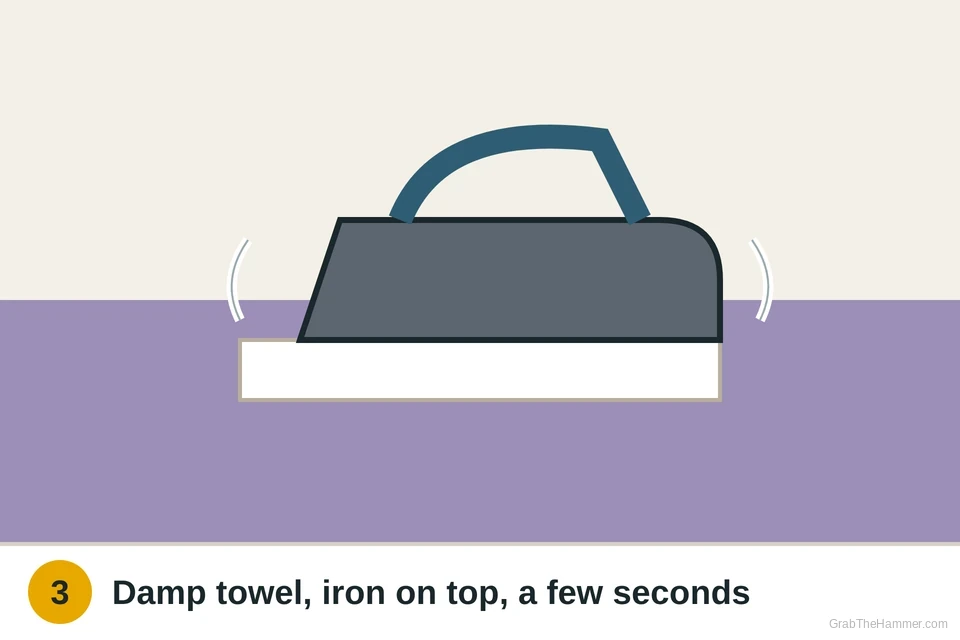
- Or use light steam for a quick fixFor faster results on synthetic carpet, wet a thin cotton towel and wring it out so it's damp, not dripping. Lay it over the dent. Set an iron to low or medium with steam on. Hold it on the towel for 5 to 10 seconds, lift it and check, and repeat a few times. Keep the iron moving and never let it touch the carpet directly. A handheld garment steamer held a few inches above the dent works too. Stop if you smell anything hot or see the fibers frizz. When you're done, unplug the iron and set it upright out of reach of children and pets while it cools.
- Groom the fibers uprightWhile the fibers are still damp, lift them with the edge of a metal spoon, a coin or a stiff nylon brush. Work in small strokes from the outside of the dent inward, and in a few directions, until the tufts stand up like the carpet around them. Don't scrape hard, which can pull fibers loose. For a loop carpet like Berber, press the loops up gently rather than scraping across them. Groom in the same direction as the pile around it; run your hand over nearby carpet to feel which way the fibers lean. Fibers brushed against the grain look lighter or darker.

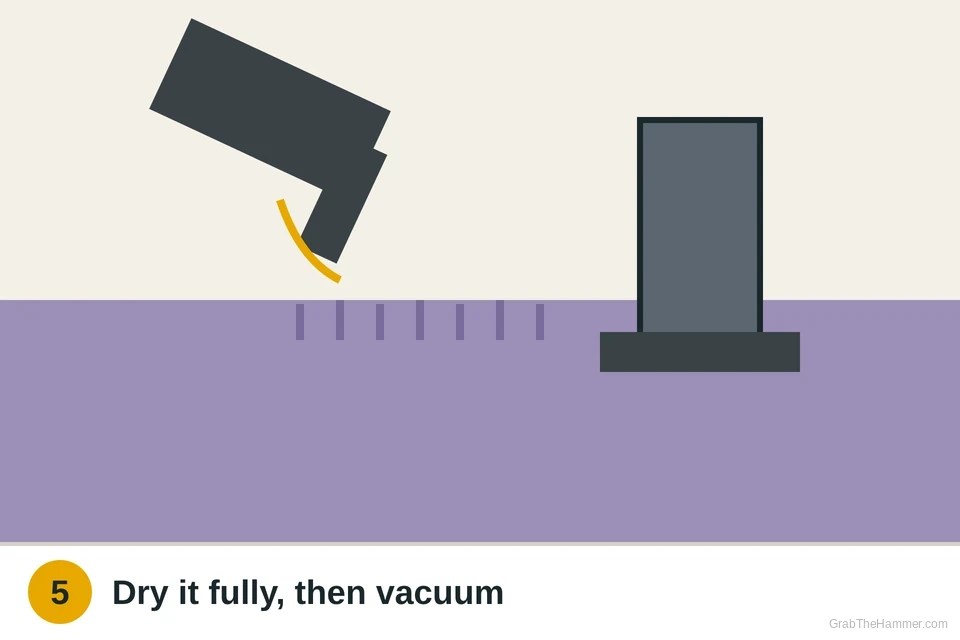
- Dry it, then vacuumLet the area air-dry completely. A fan pointed at it or a hair dryer on low, held about a foot away and kept moving, speeds things up; aim for dry within a few hours so the pad doesn't stay damp. Once it's dry, vacuum the area from several directions to blend the pile with the carpet around it. Check it in daylight from standing height. Repeat Steps 2 to 4 once or twice for a stubborn dent. If the spot still feels damp after a day, or you smell mustiness, run a fan on it longer; damp pad and backing can start to smell.
- Accept, hide or call a cleaner for old dentsDents that sat for years, especially on thin or worn carpet, may fade but not vanish, because the pad underneath stays crushed. Two or three rounds usually show you how far it will come back. A professional carpet cleaner's hot water extraction often lifts dents further as part of a normal cleaning. If a dent still shows, place a rug or the furniture so it covers the spot, or shift the furniture an inch or two from its old marks. A worn, matted traffic area is a sign of age, not dents, and only replacement fixes it.

Watch it done
- The fibers stand up like the carpet around them
- The spot is dry to the touch, with no damp smell
- You can't see the dent from standing height
- The pile leans the same way as the carpet around it
Still there after a few rounds? The pad may be crushed; hide it or ask a cleaner.
If it comes back
Dents come back when the furniture goes back on the same spot. Use furniture coasters or cups under the legs to spread the weight, and shift heavy pieces an inch or two every few months.
If the carpet is loose, rippled or lifting at the wall, that's a different fix. See the guide for carpet ripples and the guide for carpet coming up at the edge.
For a burn, a hole or a stain that won't come out, see how to patch a hole or burn in carpet.
For an area rug, the same methods work, but check the rug's label first. Many rugs have a cotton or jute backing that can shrink or stain with water, and natural fibers like jute and sisal shouldn't get wet at all. For those, brush the fibers up and let them recover over a few days, or ask a rug cleaner.
What a pro typically charges (a rough estimate; prices vary by area): A professional carpet cleaning typically runs about $100–$250 for a room or two, and dents often lift further during hot water extraction.
Find a carpet cleaner near you