Why are my lights flickering?
A light that flickers is annoying at best and unsettling at worst. Most of the time it's something simple, like a loose bulb or an LED on the wrong kind of dimmer. But flickering can also be a warning sign, and knowing the difference is the most important part of this guide.
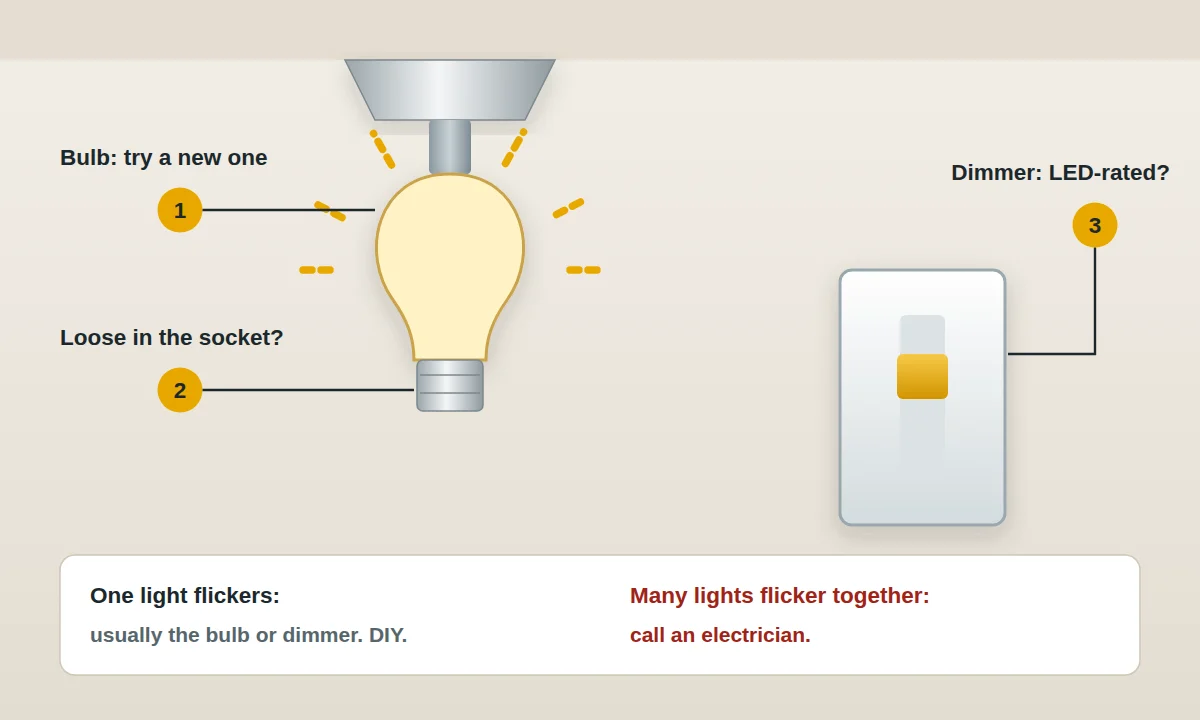
What's actually going on
Start by asking one question: is it one light, or many? A single flickering fixture is almost always the bulb, the way it's seated, or a dimmer switch that isn't made for LED bulbs. Old dimmers were designed for incandescent bulbs, and many LEDs flicker on them. Lights flickering across several rooms at once, or dimming when a big appliance starts, point to a wiring or service problem that needs an electrician.
Why it happens
Vibration from doors and ceiling fans can slowly loosen a bulb.
Older dimmers aren't designed for LEDs, which makes them flicker or buzz.
Cheap LEDs can fail in ways that look like flicker before they die.
Flicker across multiple rooms can mean loose connections or a problem with power coming into the house.
Let's fix it
- One or many?If several lights flicker together, stop here and read the call-a-pro section. If it's one light, keep going.
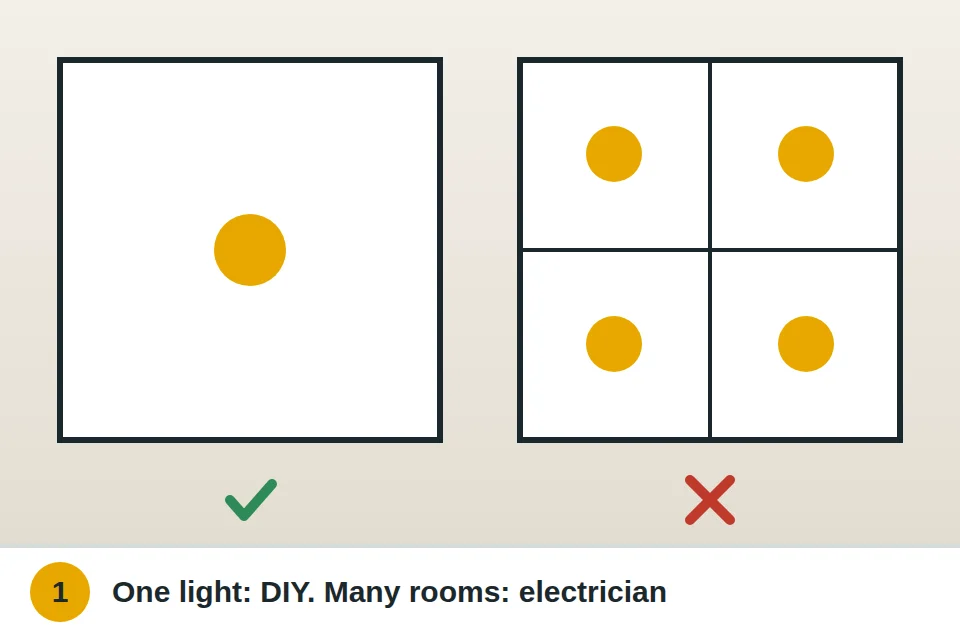
- Turn it off and snug the bulbSwitch the light off, let the bulb cool, and turn it gently clockwise until it's snug. Loose bulbs are a very common cause.
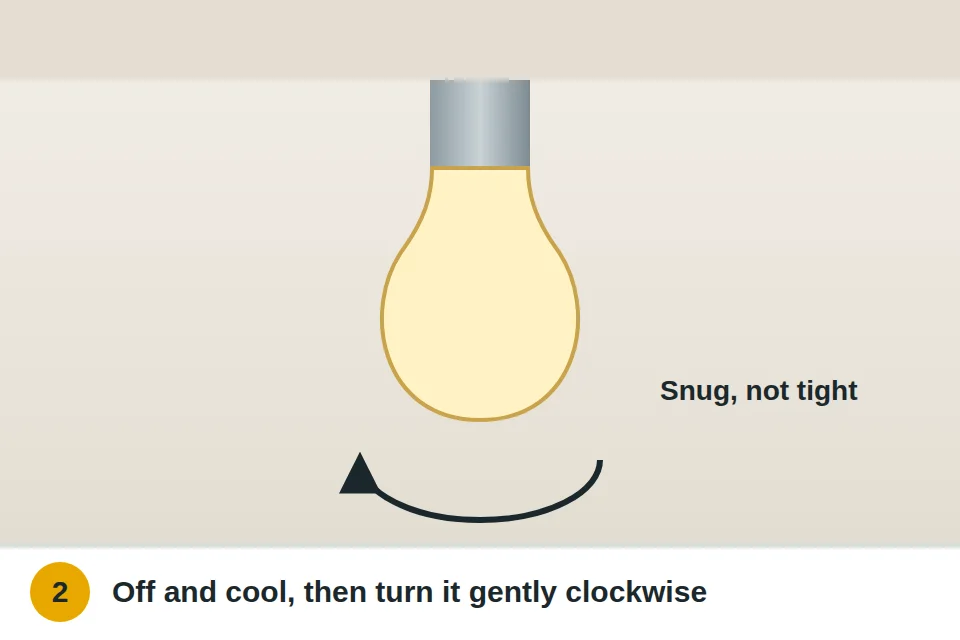
- Swap the bulbTry a new bulb, ideally one you know works elsewhere. Cheap LEDs fail in ways that look like flicker.
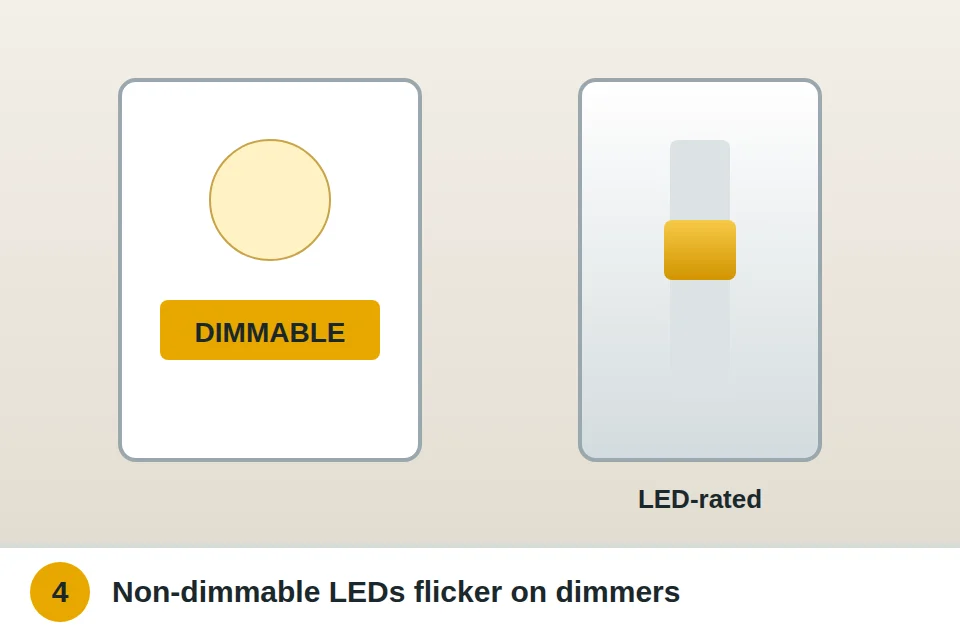
- Check the dimmerIf the light is on a dimmer, check the bulb box for "dimmable." Non-dimmable LEDs on a dimmer flicker. Either use dimmable bulbs or a dimmer rated for LEDs.
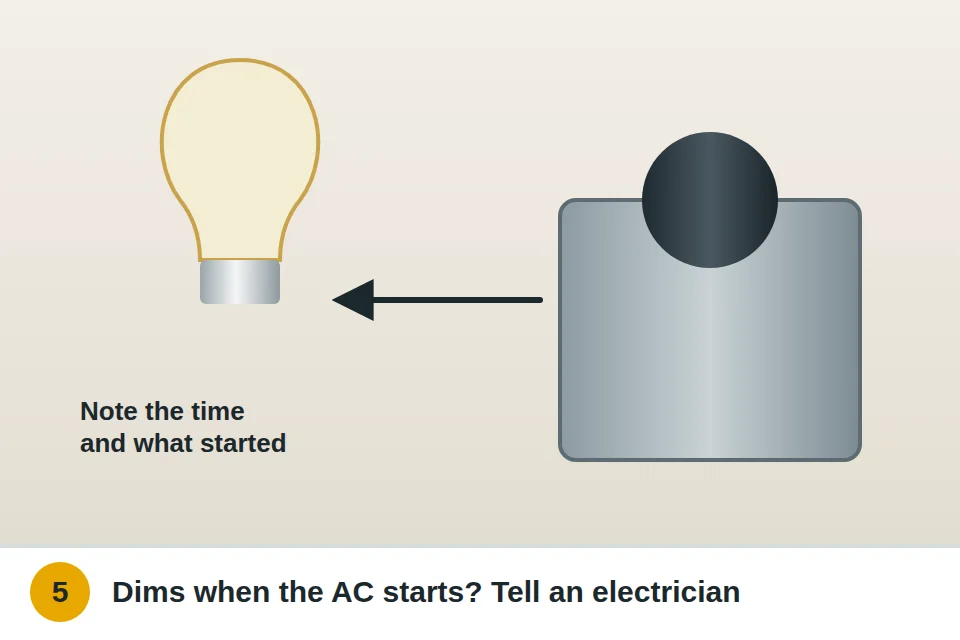
- Watch for patternsNote if it flickers when the AC, fridge or washer kicks on. Mention that if you do call an electrician.
Still not fixed?
If one fixture still flickers with a new bulb and no dimmer, the socket or the fixture's wiring connection may be loose. That's a job for an electrician unless you're experienced.
If lights dim every time the AC or fridge starts, mention it to an electrician. It can point to a loose connection or an overloaded circuit.
What a pro charges: An electrician typically charges $100–$300 to diagnose flickering lights. Replacing a dimmer usually runs $100–$250.
Common questions
Are flickering lights dangerous?
One flickering bulb usually isn't. Several lights flickering together, or flicker with buzzing, heat, or a burning smell, can mean loose wiring and should be checked by an electrician.
Why do my LED lights flicker on a dimmer?
The dimmer or bulb isn't LED-compatible. Use bulbs marked dimmable, or a dimmer rated for LEDs.