Replace a light switch safely
A switch that feels mushy, crackles, or only works if you hold it just right is worn out. Replacing a basic single-pole switch is one of the most common DIY electrical jobs, and it's safe when you take the time to confirm the power is actually off.
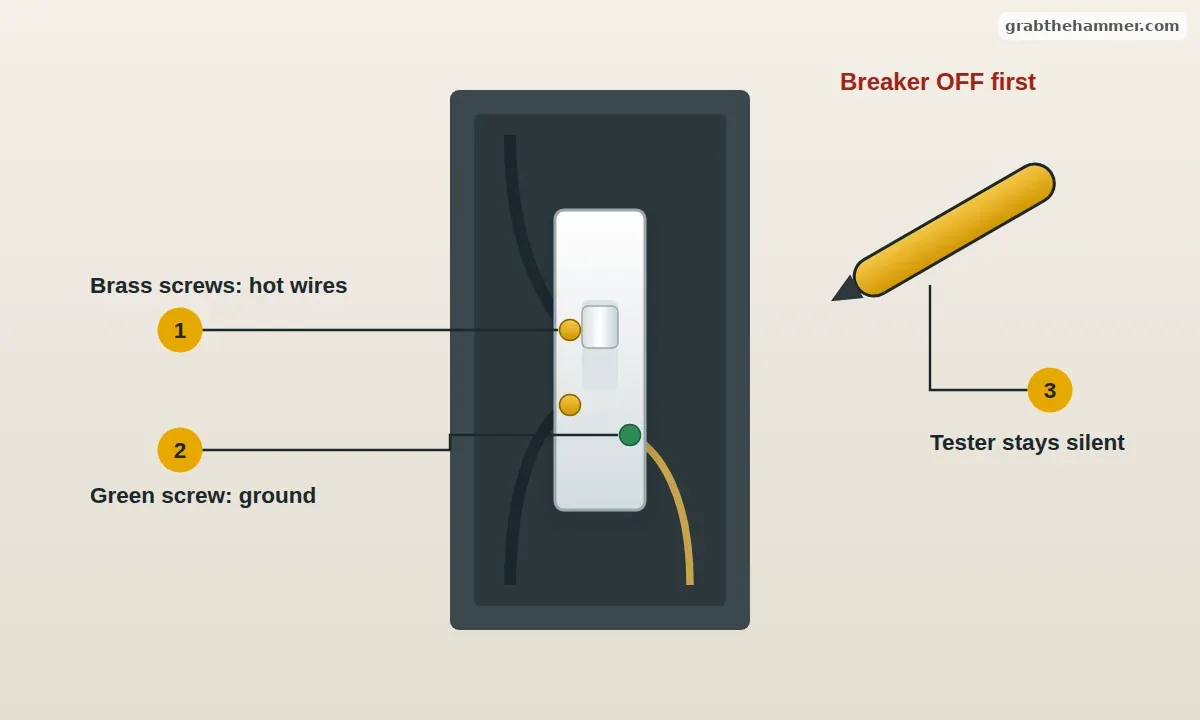
What's actually going on
A standard single-pole switch controls one light from one place, and it has two brass screws plus a green ground screw. Switches that control a light from two places (three-way switches) have an extra terminal and are wired differently. This guide covers single-pole switches only.
Why it happens
The internal contacts wear out after years of use.
A loose connection can cause flickering or buzzing.
Old dimmers aren't made for LED bulbs.
In bathrooms, humidity can corrode switches over time.
Let's fix it
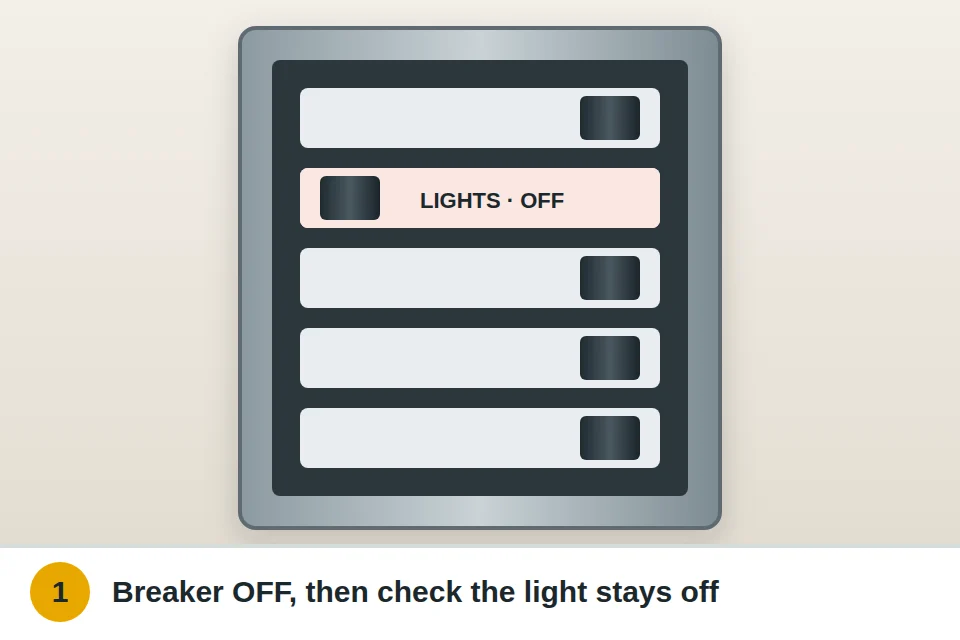
- Turn off the breakerSwitch off the circuit at the breaker panel. Flip the light switch to confirm the light is off.
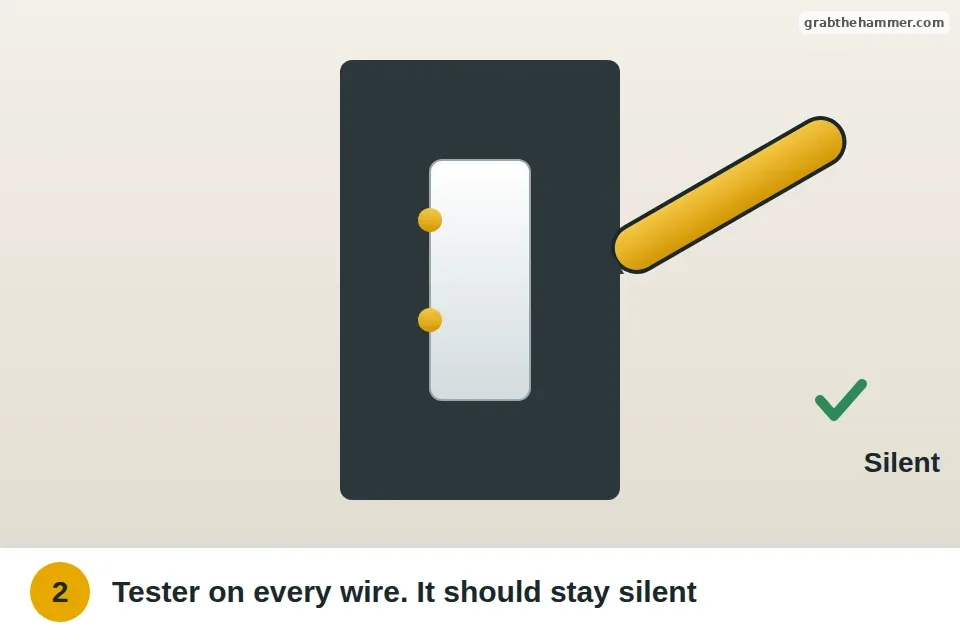
- Confirm power is offRemove the cover plate and hold a non-contact voltage tester against each wire and screw. It should stay silent.
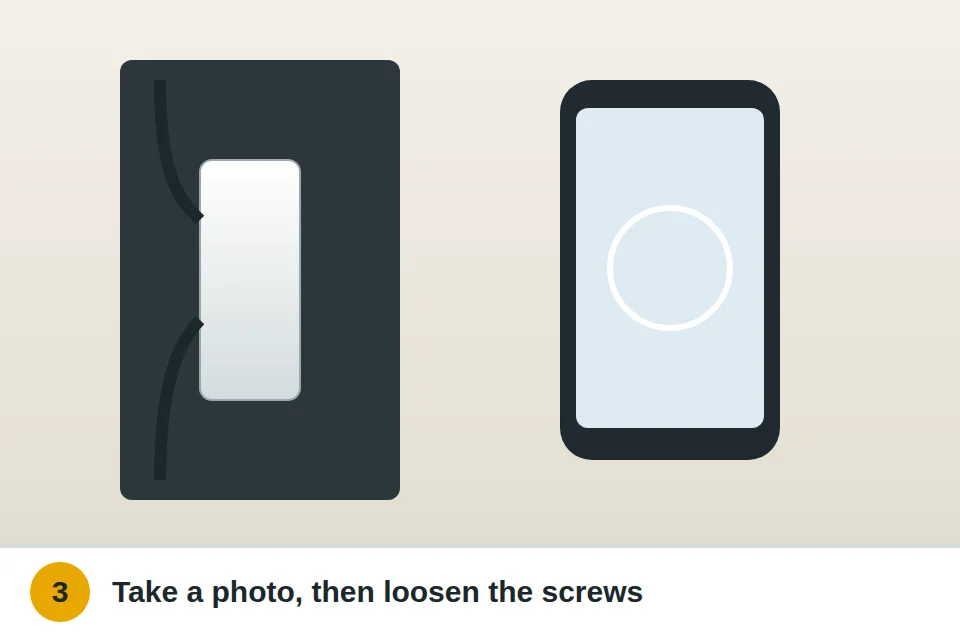
- Photograph, then disconnectTake a photo of the wiring, unscrew the switch from the box, and loosen the terminal screws to remove the wires.
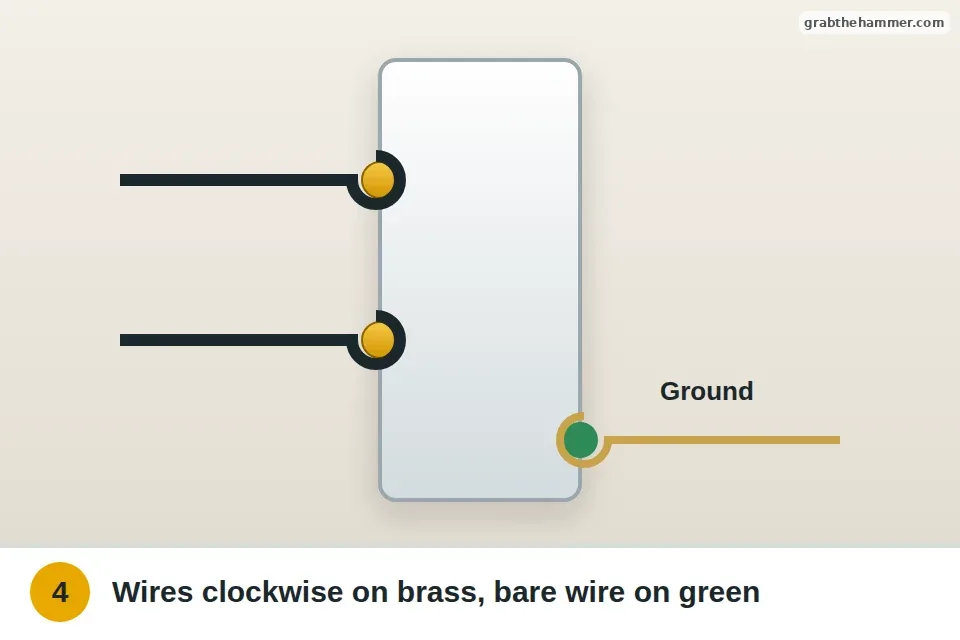
- Connect the new switchWrap each wire clockwise around a brass screw and tighten. Connect the bare or green ground wire to the green screw.
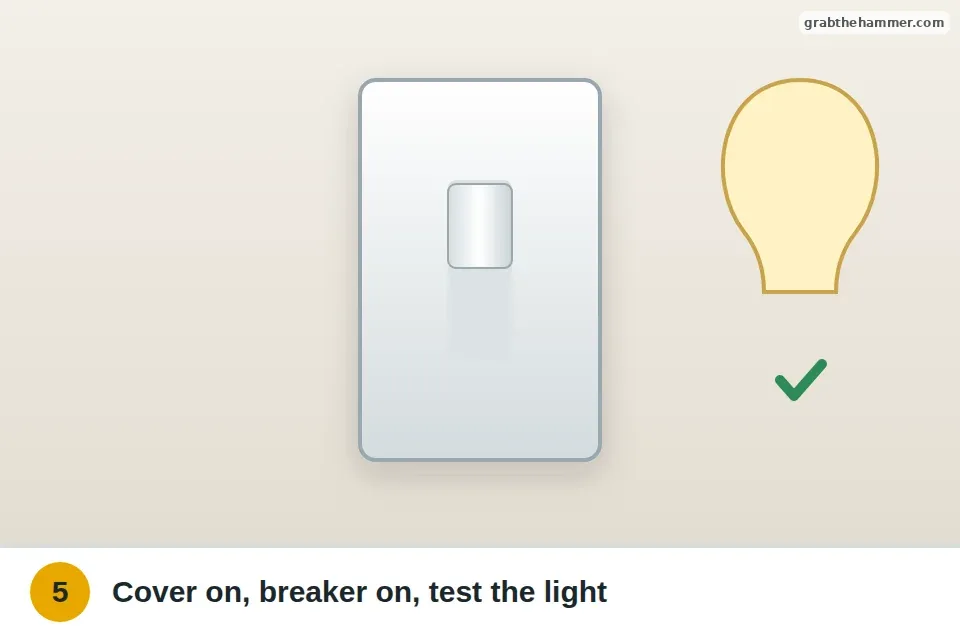
- Mount, cover and testFold the wires back into the box, screw the switch in place, attach the cover, and turn the breaker back on.
Still not fixed?
If the new switch doesn't turn the light on, recheck the wire connections and the bulb. If the breaker trips, turn it off and call an electrician.
If the switch gets warm, turn the breaker off and call an electrician. Switches should never feel warm.
What a pro charges: An electrician typically charges $100–$200 to replace a switch.
Common questions
Can I replace a light switch myself?
Many homeowners do, as long as the power is confirmed off and it's a simple single-pole switch. Check local rules; some areas require an electrician.
Why is my light switch warm?
A warm switch can mean a loose connection or overload. Turn off the breaker and have it checked.