Smoke alarm going off for no reason
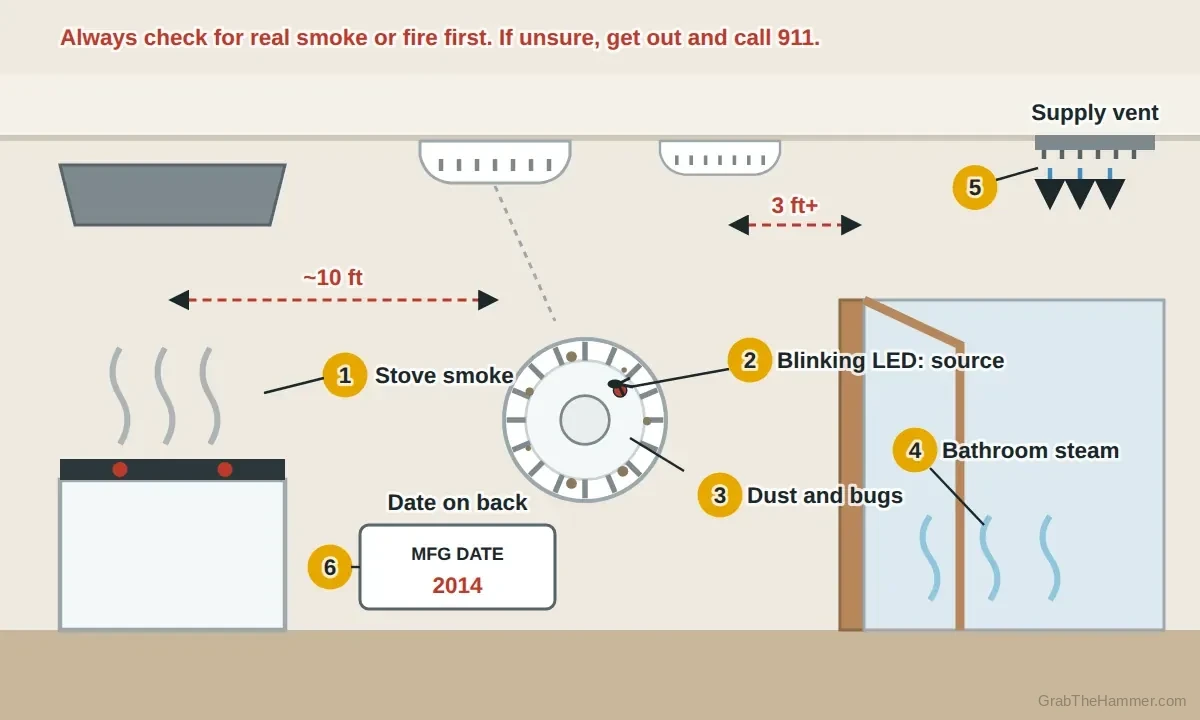
A smoke alarm going off for no reason almost always has a reason; it's just not a fire. Cooking smoke, shower steam, dust or a tiny insect inside the sensing chamber, and alarms mounted too close to kitchens, bathrooms or vents cause most nuisance alarms. Old age is another big one, since sensors drift after about 10 years. Always check for real smoke or fire before you assume it's false, and never leave an alarm disabled. An alarm that goes off while you cook is usually just in the wrong spot.

Why smoke alarms false alarm
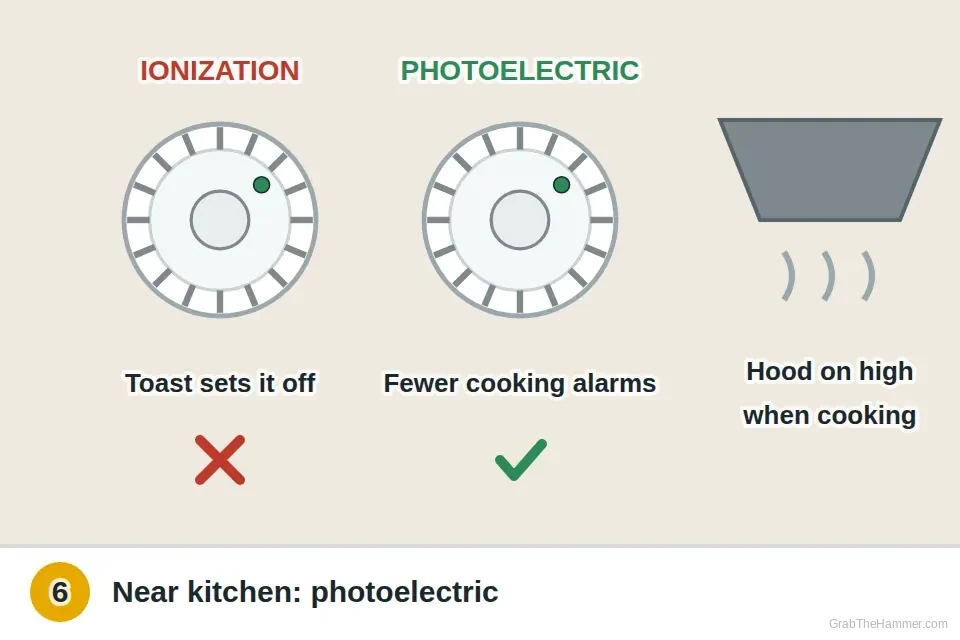
Most home smoke alarms use one of two sensors. Ionization alarms react quickly to the tiny particles from fast, flaming fires, and they're also quick to react to toast and searing. Photoelectric alarms use a light beam and react better to smoldering fires, and they tend to give fewer cooking alarms. Both work by sensing particles in a small chamber, so anything that drifts in, like steam, dust or a bug, can look like smoke.
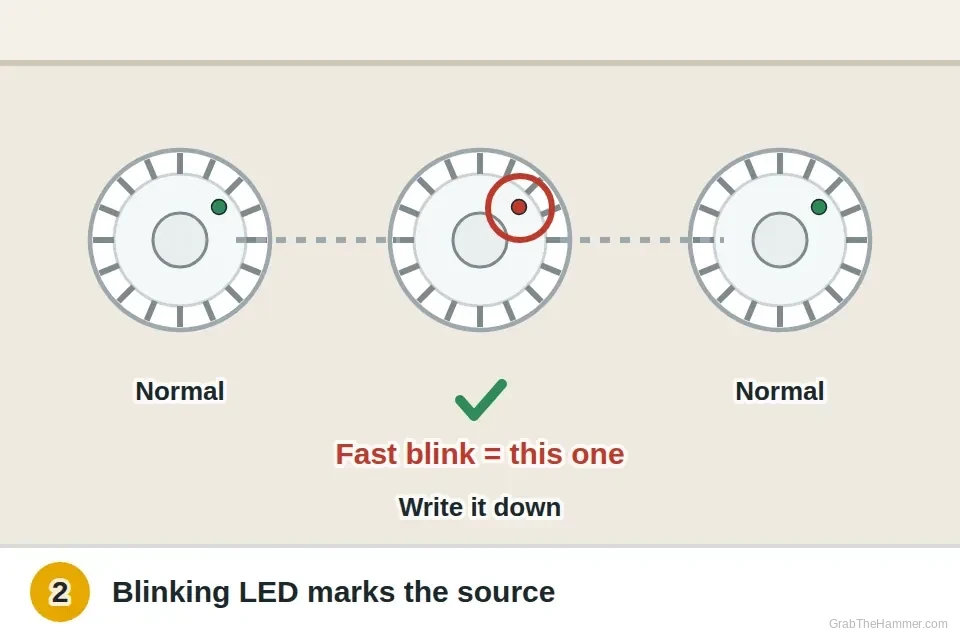
In many homes, hardwired alarms are interconnected, so when one detects something, they all sound. That makes it hard to tell which one actually started it. Most interconnected alarms mark the initiating unit with a fast-blinking or steady LED, which is the key to tracking down a repeat false alarm. A short beep or chirp every minute or so is a different problem, usually a low battery; there's a separate guide for a smoke alarm chirping.
Common causes of false alarms
Searing, toast and showers drift into a nearby alarm.
Particles inside the sensor look like smoke.
Too close to the kitchen, bathroom or an air vent.
Sensors drift and false alarm after about 10 years.
| You notice | Likely cause | Start at |
|---|---|---|
| Alarm sounds and you smell smoke | Possible real fire | Step 1 |
| Every alarm in the house sounds | One interconnected unit set them off | Step 2 |
| Goes off at random, often at night | Dust or insects in the chamber | Step 4 |
| Goes off after showers | Too close to the bathroom | Step 5 |
| Goes off every time you cook | Ionization alarm near the kitchen | Step 6 |
| Alarm is yellowed and old | Past its 10-year life | Step 7 |
Let's fix it
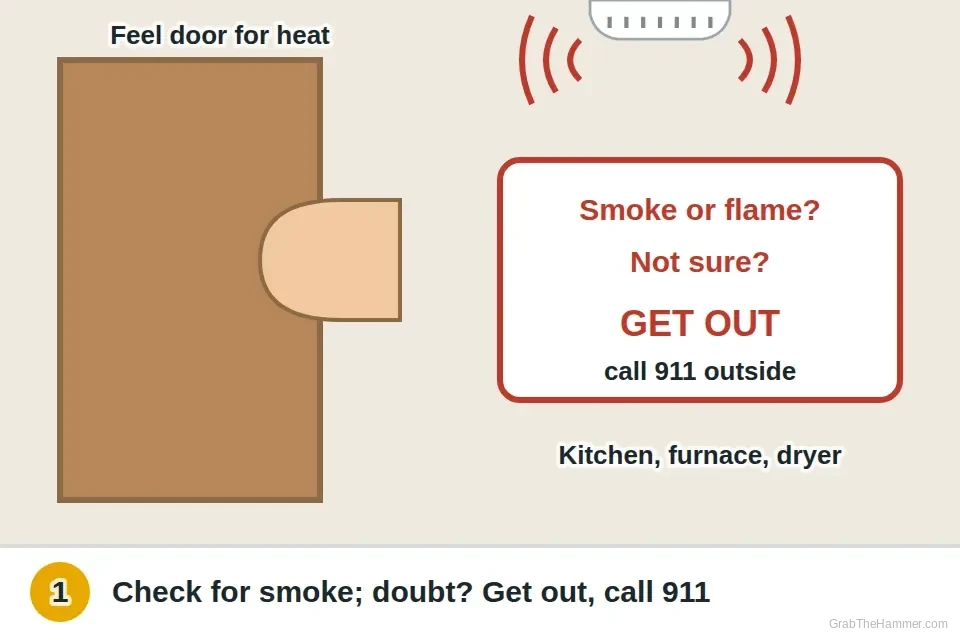
- Rule out a real fire firstTreat every alarm as real until you've checked. Walk through the house looking and smelling for smoke, check the kitchen, the furnace or utility area, the dryer and any space heaters, and feel closed doors for heat before opening them. If you see smoke or flames or aren't sure, get everyone out and call 911 from outside. If a carbon monoxide alarm is also sounding, leave and call for help; we have a guide for a carbon monoxide alarm beeping.
- Find the alarm that started itIf your alarms are interconnected, they all sound at once, but only one detected something. Look at each alarm's LED while it's sounding or right after; the initiating unit usually blinks faster or stays lit, depending on the brand, so check the label or manual. Write down which one it was, since the fix depends on that alarm and its location.
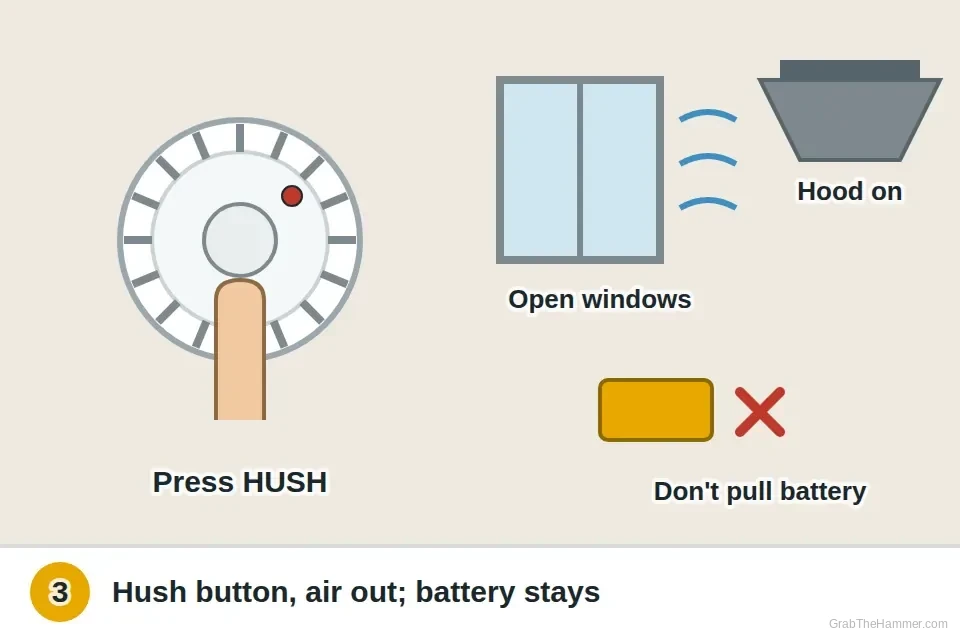
- Silence it the right wayPress the hush or test/silence button on the alarm that started it to quiet it for several minutes while you clear the air. Open windows and run the range hood or a fan to move smoke or steam away. Don't pull the battery or disconnect the alarm and leave it that way; if you take it down to work on it, put it back the same day.
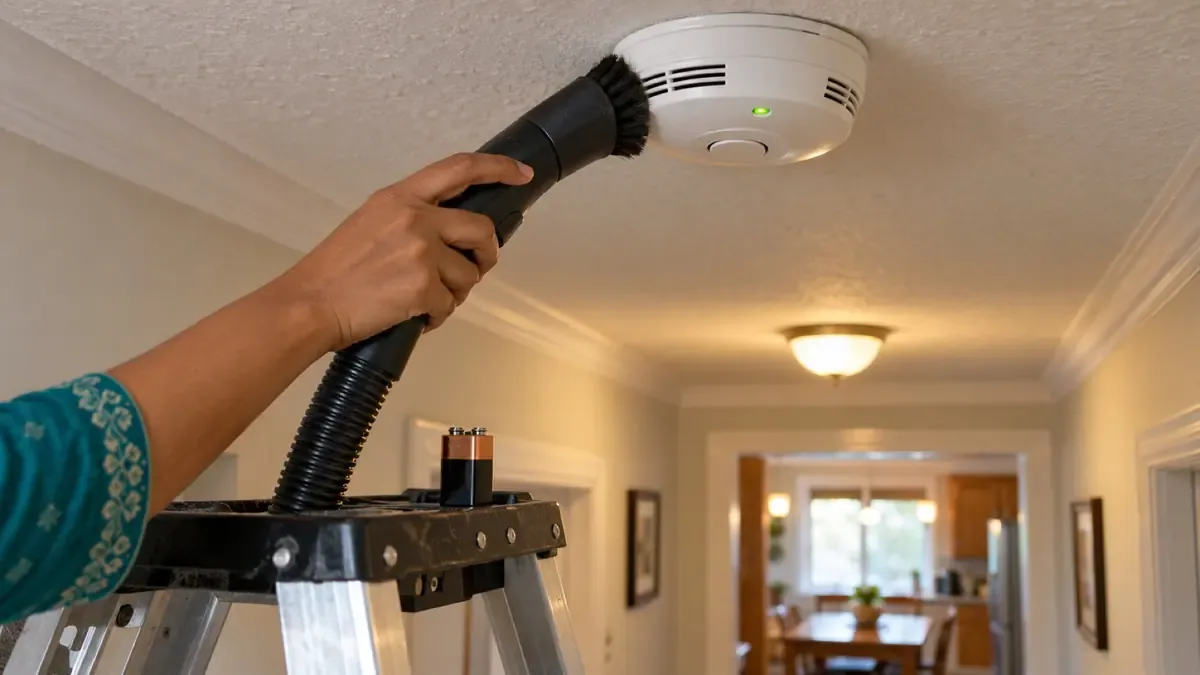
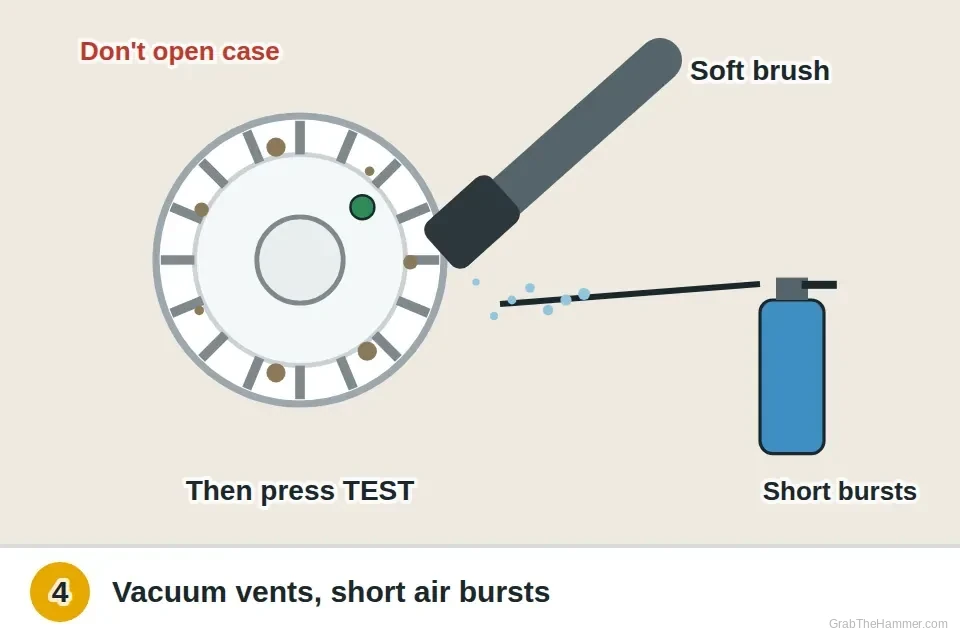
- Clean out dust and bugsDust, cobwebs and small insects inside the sensing chamber are a common cause of random alarms, especially after construction or in spring. Vacuum the vents around the alarm with a soft brush attachment, then blow short bursts of compressed air through the openings. Don't open the sealed case or spray cleaners into it. Press the test button afterward to confirm it still sounds.
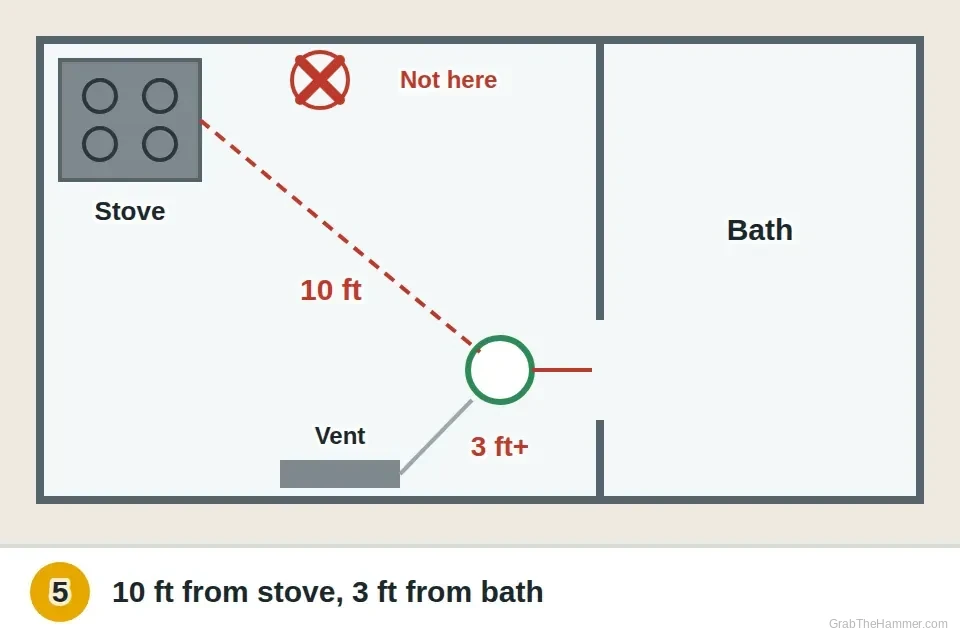
- Check the locationAlarms too close to cooking, steam or moving air go off far more often. Common guidance is to keep alarms about 10 feet from cooking appliances and at least 3 feet from a bathroom door, and away from HVAC supply vents, ceiling fans, and the very peak or corner of a ceiling. If an alarm keeps sounding from shower steam or cooking, move it so it meets those distances rather than removing it, and check your local code, since hardwired alarms may need an electrician to relocate.
- Use the right type near the kitchenIf an ionization alarm near the kitchen goes off every time you cook, replace it with a photoelectric alarm or one with a hush feature made for areas near kitchens. Run the range hood on high whenever you cook, and keep the oven and toaster clean so old grease doesn't smoke. High humidity can also trigger alarms, so a bathroom fan that actually vents outdoors helps alarms near bathrooms.
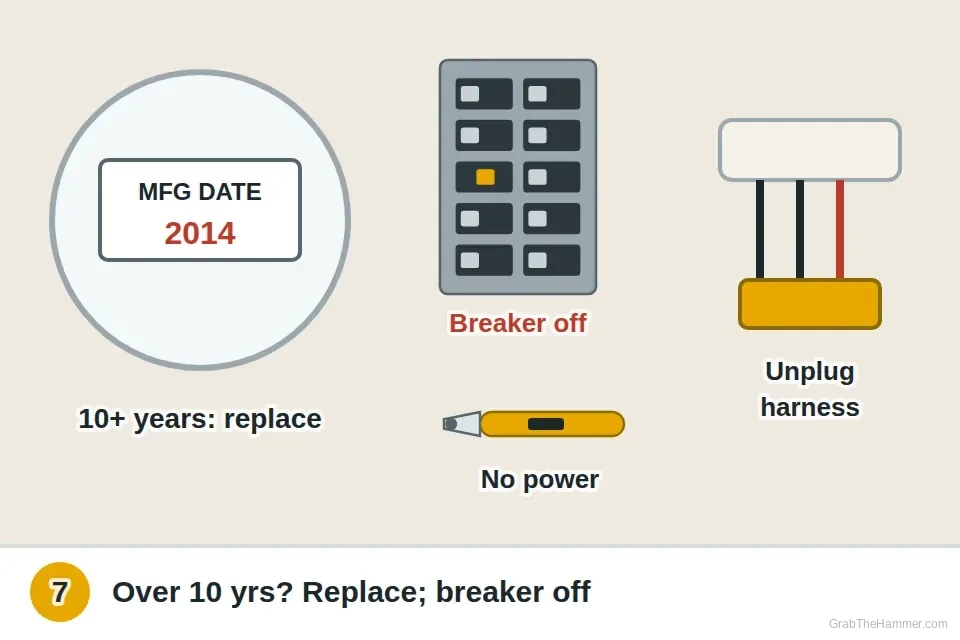
- Replace alarms that are 10 years oldTake the alarm down and look for the manufacture date on the back. Smoke alarms should be replaced 10 years after that date, and old sensors are a common source of false alarms. For a hardwired alarm, turn off its breaker and confirm the power is off with a voltage tester, then unplug the wiring harness and install a replacement; many brands make models that fit the same plug, or include a new harness to connect. Replace all alarms of the same age together, and test every one when you're done.
Watch it done
- No alarms while you cook or shower
- The alarm tests fine when you press the test button
- It's under 10 years old
If it's a different alarm problem
If the alarm is chirping rather than sounding full alarms, see the guide for a smoke alarm chirping.
If a carbon monoxide alarm is going off, leave the house and check our guide for a carbon monoxide alarm beeping.
What a pro typically charges (a rough estimate; prices vary by area): An electrician usually charges $100–$200 for a service call, $50–$100 per alarm to replace hardwired smoke alarms plus the alarm itself, and $150–$350 per alarm to relocate or add a new hardwired alarm.
Find an electrician near you