Stop a smoke alarm from chirping
It's 3 a.m. and there's a single chirp. You lie there waiting, and 45 seconds later, there it is again. A chirping smoke alarm almost always wants a new battery, but sometimes it's telling you something more important: that it's too old to trust.
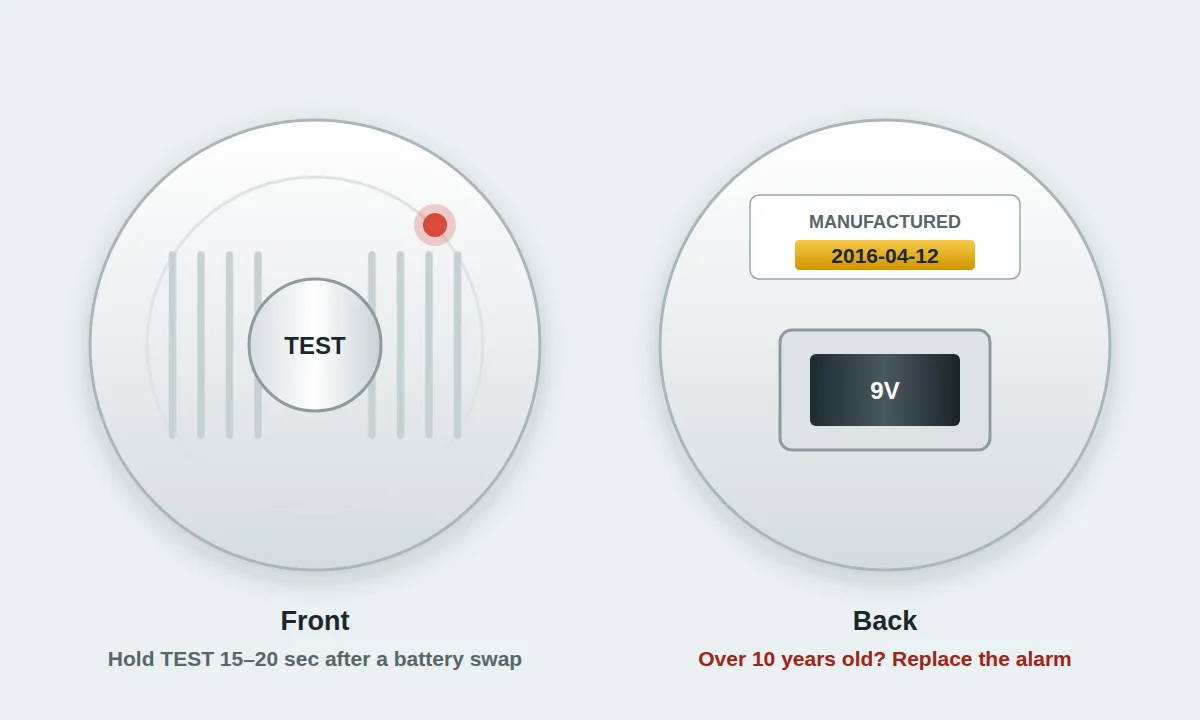
What's actually going on
Alarms chirp for a low battery, and they're designed to be annoying on purpose so you don't ignore it. The reason it's always at night is that batteries lose a little voltage as the house cools down, which pushes a weak battery below the threshold.
Here's the part most people don't know: smoke alarms expire. The sensors lose sensitivity, and most manufacturers say to replace the whole unit every 10 years. Many chirp at end-of-life, and no new battery will stop it.
Why it happens
The most common reason. The chirp is designed to be impossible to ignore.
Batteries lose a bit of voltage as the house cools, which is why weak batteries chirp at night.
Most alarms are meant to be replaced every 10 years. Many chirp at end of life, and no battery will stop it.
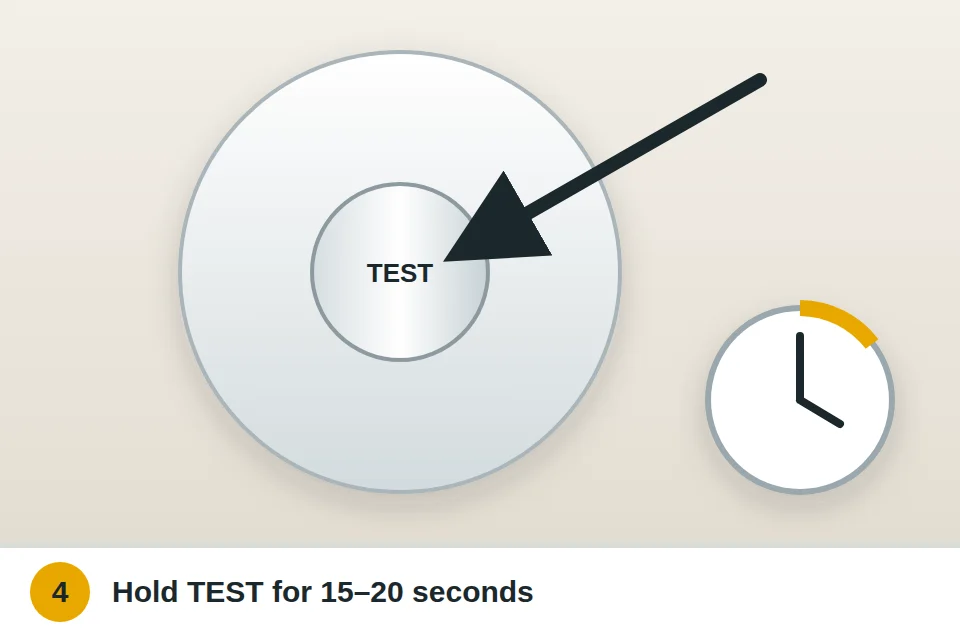
Some alarms keep chirping after a battery change until you hold the test button to clear the memory.
Let's fix it
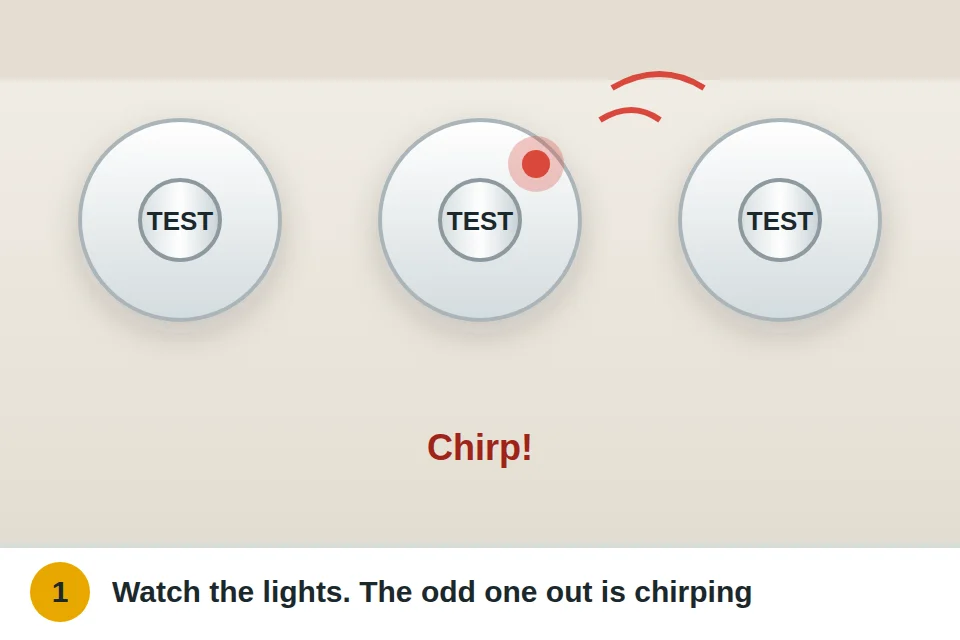
- Find the chirperStand still and wait for the chirp. Sound bounces, so check each alarm's light. The chirping one often has a flashing or different-colored light.
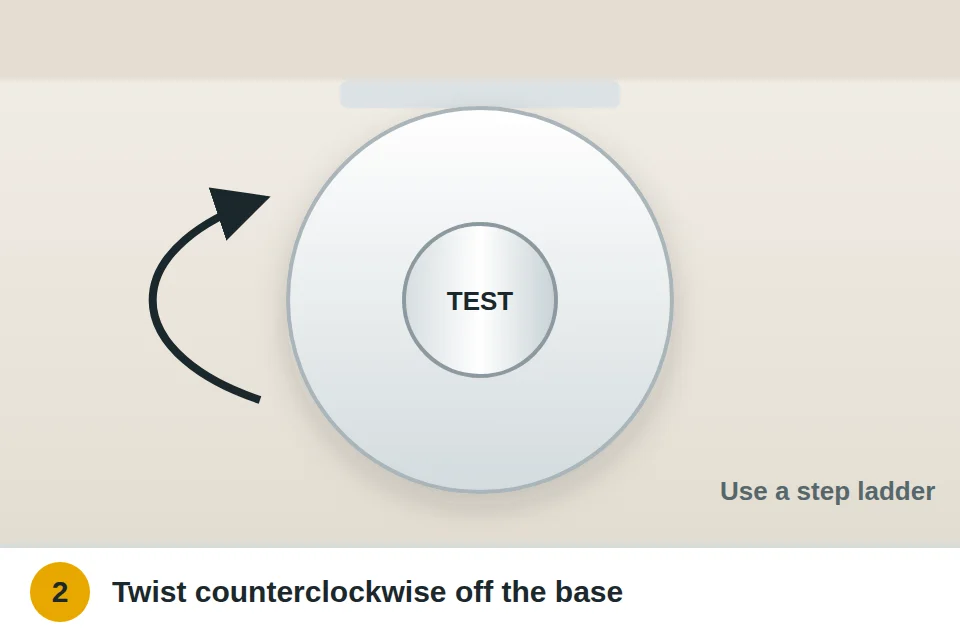
- Twist it off and check the dateMost alarms twist counter-clockwise off the base. Look for the manufacture date on the back.
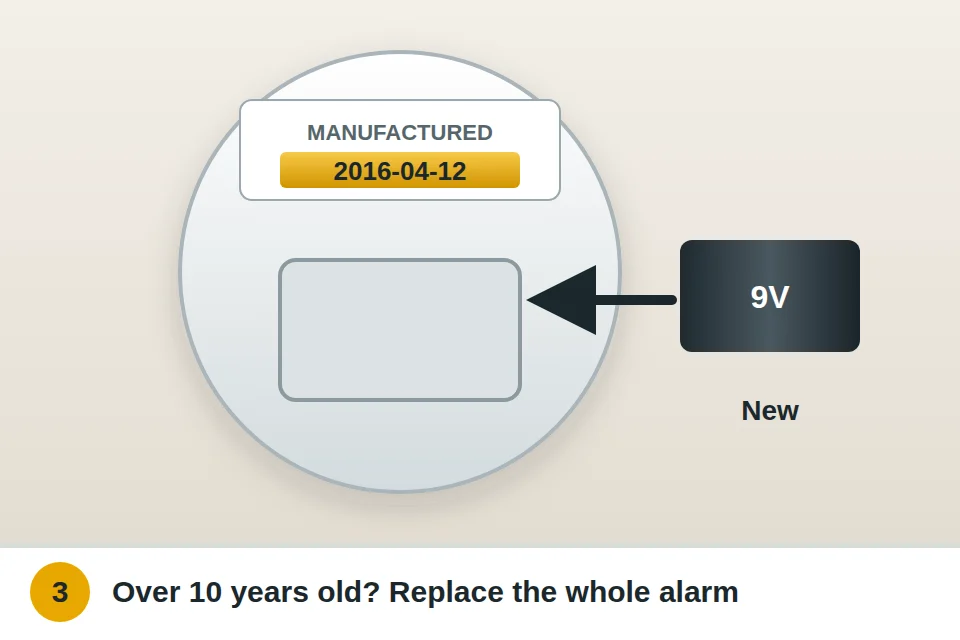
- Replace the batterySwap in a fresh battery, pressing it firmly into place. For hardwired alarms, there's still a backup battery inside.
- Hold the test buttonHold it for 15 to 20 seconds. This clears the memory on many models, and some keep chirping without it.
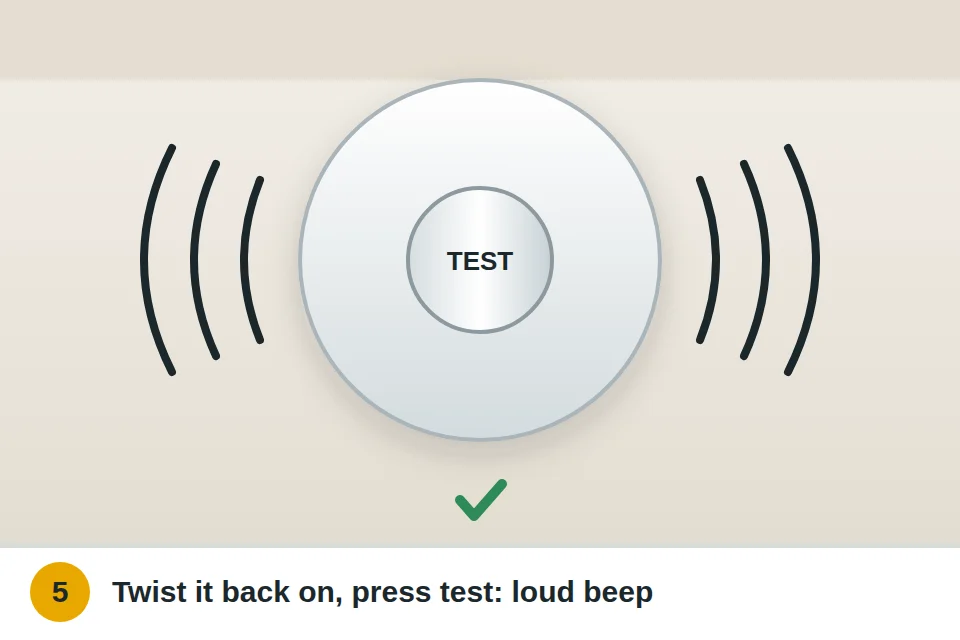
- Reinstall and testTwist it back on and press test. You should hear a loud alarm.
Still not fixed?
Smoke alarm chirping after a new battery? Hold the test button for 15 to 20 seconds. Also check that the battery drawer is fully closed; some won't make contact otherwise.
Hardwired alarm chirping? It still has a backup battery. Replace that, then reset it.
What a pro charges: New smoke alarms cost $15–$60 each. An electrician typically charges $100–$250 to replace hardwired alarms.
Common questions
Why does my smoke alarm chirp with a new battery?
It may need its memory cleared (hold test for 15–20 seconds), the battery may not be seated fully, or it may have reached end of life.
How many smoke alarms do I need?
Guidelines call for one in each bedroom, one outside each sleeping area, and one on every level of the home, including the basement.
Why is my hardwired smoke detector chirping?
Hardwired alarms have a backup battery that runs low. Replace it and hold the test button for 15 to 20 seconds to reset.