Christmas lights half out or not working
Most mini light strings are wired in sections, often 50 bulbs each, and the bulbs in a section share one path for the electricity. When one bulb is loose, broken or missing, or a tiny shunt inside a dead bulb doesn't do its job, the whole section can go dark. If the entire string is out, the cause is often a blown fuse in the plug or a tripped GFCI outlet. Both problems are fixable with a few minutes, a spare fuse and some patience. A damaged cord is the one thing to never repair; throw that string away.


Why half the string goes out
Classic incandescent mini light strings are wired in series sections. In each section, the electricity flows through one bulb, then the next, and so on, like links in a chain. A 100-bulb string often has two sections of 50, which is why exactly half goes dark. If any bulb in a section is loose, missing or broken, the chain is open and that whole section turns off. To keep one dead bulb from killing the section, each bulb has a tiny shunt wire inside that's supposed to close the circuit when the filament burns out. Shunts don't reliably work, especially in cheaper or older strings.
When the entire string is dark, the problem is usually upstream: a tripped GFCI outlet, a dead outlet or extension cord, or a blown fuse. Most plugs have two small fuses, often rated around 3 amps, behind a sliding door; they blow when too many strings are connected end to end or there's a short. LED strings work much the same way but are often wired so that individual LEDs can't be swapped as easily, and some can't be repaired at all. A string with a cut, crushed or melted cord is a fire and shock risk and should be thrown away.
Why the lights are out
One bulb out of its socket opens the whole section.
A dead bulb that doesn't pass power on.
Too many strings connected, or a short.
Common outdoors after rain.
From pets, staples or rough storage.
Overloads the first string's fuses.
| You notice | Likely cause | Start at |
|---|---|---|
| Nothing lights at all | Outlet or GFCI | Step 1 |
| Whole string out, outlet works | Blown fuse | Step 2 |
| Half or one section out | Loose, missing or bad bulb | Step 3 |
| Can't see which bulb is bad | Use a light or voltage tester | Step 4 |
| Bad bulb found | Replace with matching bulb | Step 5 |
| Strings keep blowing fuses or cords are damaged | Overloaded or damaged string | Step 6 |
Let's fix it
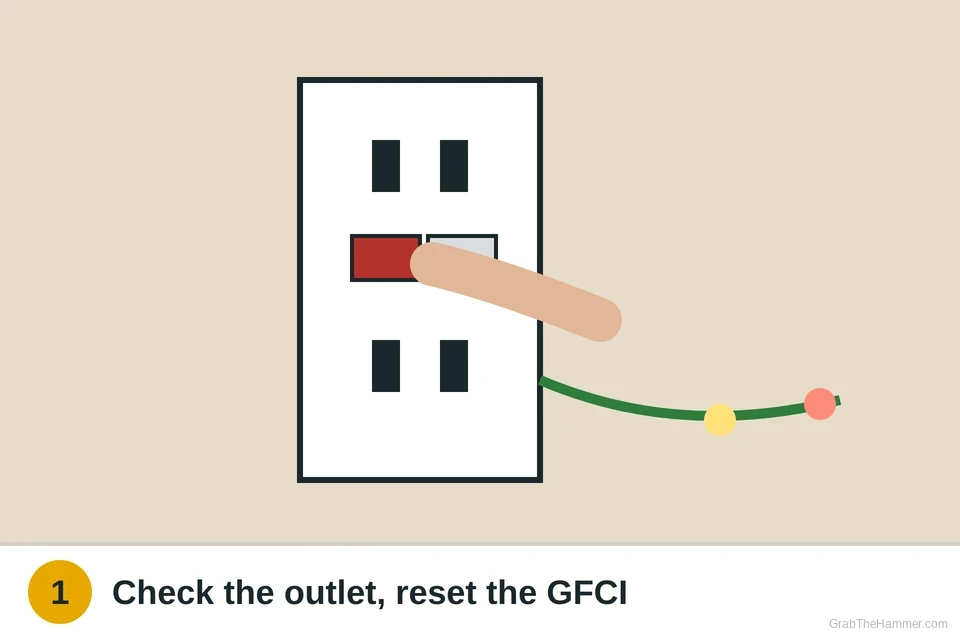
- Check the outlet and GFCIIf the whole string is dark, plug a lamp or phone charger into the same outlet to see whether it has power. Outdoor and garage outlets, and many in kitchens and bathrooms, are protected by a GFCI, which trips after rain or a wet plug. Press the Reset button on the outlet, or on the first GFCI outlet upstream, often in a garage or bathroom. See how to reset a tripped outlet or breaker. Also check any extension cord or timer between the outlet and the lights; test with the lights plugged straight into the outlet.
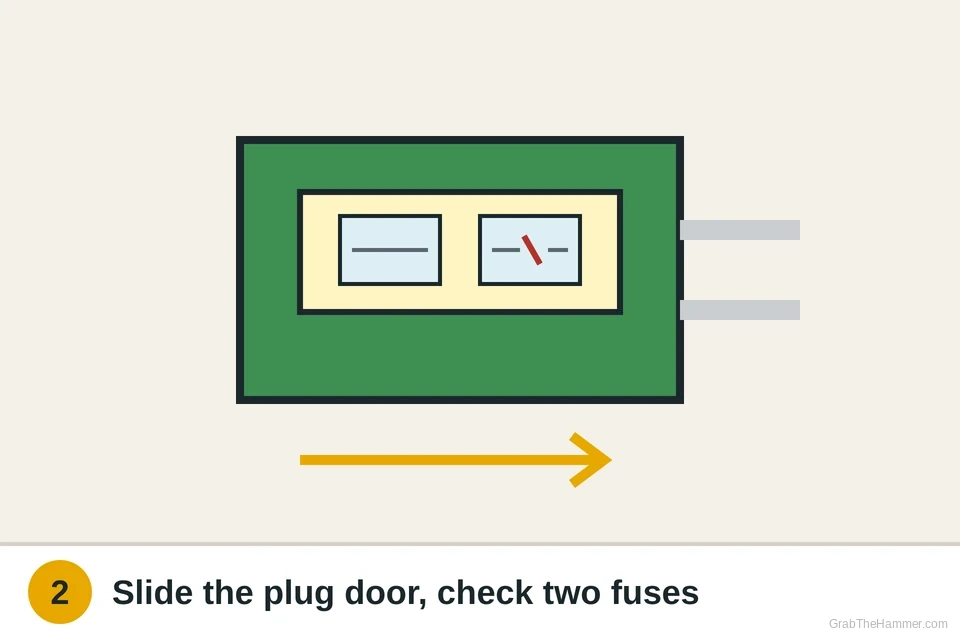
- Check and replace the plug fusesUnplug the string. On the male plug, slide the small door on the top toward the prongs; a flat screwdriver helps. Inside are usually two tiny glass fuses. Pry them out gently and hold each to the light: a broken wire inside or a dark, cloudy glass means it's blown. Replace it with a spare from the bag that came with the lights, or a fuse with the same amp rating printed on the plug or tag, often 3 amps. Never use a higher rating or wrap foil around a fuse. Close the door and plug the string in. If the new fuse blows right away, look for a damaged cord or too many strings connected.
- Push in every bulb in the dark sectionWith the string unplugged, start at the first dark bulb next to the lit part, since the problem is often near there. Firmly push each bulb into its socket; you may feel a loose one click into place. Look for missing bulbs, bulbs with broken glass, or bent wires at the base of a bulb, where the two thin wires should run straight down the sides. Plug the string in after every few bulbs to see if the section lights. A bulb that's crooked, or wires that don't touch the socket contacts, keeps the whole section dark.

- Find the bad bulb with a testerIf pushing bulbs in didn't work, a tester saves a lot of time. A light-string repair tool, sold at hardware and holiday stores, can send a pulse through the string to fix failed shunts, and often includes a bulb tester and a voltage detector. Or use a non-contact voltage tester: with the string plugged in, run its tip slowly along the wire from the lit end into the dark section. It will beep along the wire until just past the bad bulb, where the signal stops or changes. Unplug the string, then check the bulbs right around that spot.

- Replace the bad bulb with a matching oneUnplug the string. Pull the bad bulb straight out with its plastic base. Most mini bulbs slide out of the base so you can reuse it: straighten the two wires, slide the old bulb out, slide the new bulb in, and fold its wires up along the sides of the base. Match the voltage printed on the string's tag or on the spare bulbs, often 2.5 or 3.5 volts; a mismatched bulb can burn out its neighbors or overheat. Push the bulb and base firmly back into the socket and plug the string in. Keep the spares in a labeled bag for next year.

- Don't overload, and retire damaged stringsCheck the tag on the cord for how many strings can be connected end to end; going over that blows fuses and can overheat the first string. Run long displays from separate outlets or a properly rated outdoor extension cord. Look over every string before you hang it: cracked sockets, exposed copper, crushed or melted spots, or a cord that feels hot mean that string should go in the trash, not get taped up. If a string keeps going half dark after repairs, a broken wire inside is likely, and replacing the string is the safe fix. Many LED strings can't be repaired at all.

Watch it done
- Every section lights when plugged in
- The plug and cord stay cool after an hour
- No blown fuses when the strings are connected within the label's limit
If it comes back
If the outdoor lights go out whenever it rains, the GFCI is tripping on moisture. Keep plugs and connections off the ground, wrap connections in a cover made for outdoor holiday lights, and see the guide for an outdoor outlet that isn't working.
If the breaker trips when the lights come on, the circuit is overloaded. Move some strings to another circuit; see the guide for a breaker that keeps tripping.
For a light fixture or LED bulb that glows faintly when it's switched off, see the guide for LED lights that glow when off.
What a pro typically charges (a rough estimate; prices vary by area): An electrician typically charges about $100–$250 to diagnose a dead outdoor outlet, and about $150–$400 to add or replace a GFCI outlet.
Find an electrician near you