LED lights glow when the switch is off
An LED bulb that glows faintly or blinks every few seconds after you turn it off is usually picking up a tiny trickle of current that an old incandescent bulb would never have shown. That current often comes from a lighted switch, a smart switch or a dimmer that needs a little power to run itself, or from wires running side by side that induce a small voltage. It's usually harmless, but it can be annoying and may shorten the bulb's life. In rare cases it means the switch is wired to the neutral instead of the hot wire, which is a safety problem an electrician should fix.


Why LED bulbs glow when they're off
An incandescent bulb needs a lot of current to make its filament glow, so a tiny leak through a switch does nothing visible. An LED bulb has a small electronic driver inside that charges up and lights the LEDs with very little power. If even a few milliamps reach it when the switch is off, the driver slowly charges until it can light briefly, then drains, which shows up as a dim glow or a blink every few seconds. Nothing is wrong with the bulb; it's just sensitive to current an old bulb would ignore.
That current usually comes from one of three places. Lighted switches, smart switches, occupancy sensors and many dimmers pass a small current through the bulb to power their own light or electronics when they're off. Long cable runs, especially three-way switch wiring where two wires run side by side, can induce a small voltage on the switched wire. And less commonly, a switch wired to interrupt the neutral instead of the hot leaves the fixture energized when it's off, which is a code and safety issue. The fixes match the cause: a different bulb, a different switch, a small load device at the fixture, or a wiring correction.
What makes LEDs glow when off
The little light in the switch uses current through the bulb.
Electronics that need power even when off, without a neutral.
Some LED bulbs glow more easily than others.
Long runs or three-way wiring couple a small voltage.
Miswired switch leaves the fixture live. Needs an electrician.
| You notice | Likely cause | Start at |
|---|---|---|
| Only some bulbs or brands glow | Bulb driver | Step 1 |
| Switch has a small light in it | Lighted switch leakage | Step 2 |
| Smart switch or dimmer on the circuit | Switch powers itself through the bulb | Step 3 |
| Smart switch maker offers an adapter | Needs a load capacitor | Step 4 |
| Plain switch, still glows | Induced voltage or wiring | Step 5 |
| Fixture tests live with the switch off | Switched neutral | Step 6 |
Let's fix it
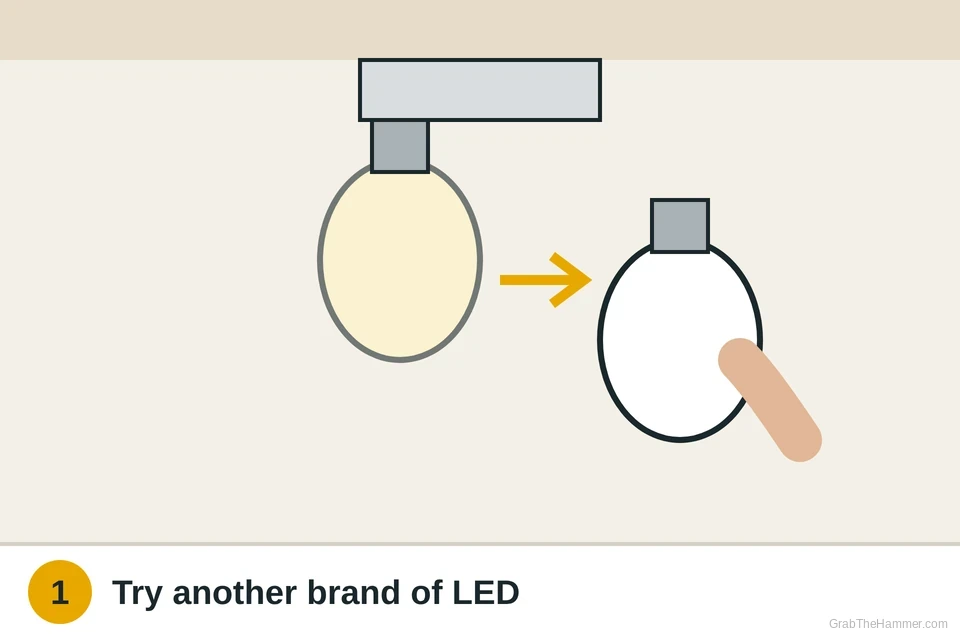
- Try a different bulbWith the switch off and the fixture cool (give it about 5 minutes), swap the glowing LED for a different brand or model, ideally one labeled dimmable if the switch is a dimmer. If you have an old incandescent or halogen bulb, try that too; if the glow stops with an incandescent, the circuit has a small leakage current that the LED is sensitive to. Some LED bulbs, often higher-quality ones, have drivers that resist ghosting better. If a different LED doesn't glow, you're done: use that type in this fixture. If every bulb glows, keep going.
- Look for a lighted switchLook at the wall switch in the dark. A small glowing dot or a lit toggle means it's a lighted or locator switch. Many of these power their little light by passing a trickle of current through the bulb when the switch is off, which is exactly what makes LEDs glow. The simple fix is to replace it with a standard switch, or a lighted switch that's labeled for LED loads or has a neutral connection. With the breaker off and the power tested, follow the guide for replacing a light switch, connecting the new switch the same way as the old one.

- Check for a smart switch or dimmerSmart switches, timers, motion sensors and many dimmers need a little power to run their electronics even when the light is off. Models without a neutral wire get that power by leaking it through the bulb, which can make LEDs glow, flicker or flash. Check the switch's model number and its LED compatibility list on the maker's website. Many brands say which bulbs work and how to set the low-end trim, a dimmer adjustment that sets the lowest output; raising it can stop flicker. If your switch box has a neutral (a bundle of white wires tied together), a switch model that uses the neutral usually ends the problem.

- Add the switch maker's load capacitorSeveral smart switch and dimmer makers sell a small load capacitor or bypass for exactly this problem, typically $10 to $25. It's a small device connected across the hot and neutral at the light fixture, in parallel with the bulb, that gives the leakage current somewhere to go instead of through the LED. Use only the one your switch maker specifies, and follow its instructions exactly. With the breaker off and the power tested, lower the fixture, connect the device's two leads to the fixture's hot (switched) and neutral wires with wire connectors, tuck it into the box and refit the fixture. Ceiling work is easier with a helper holding the fixture.

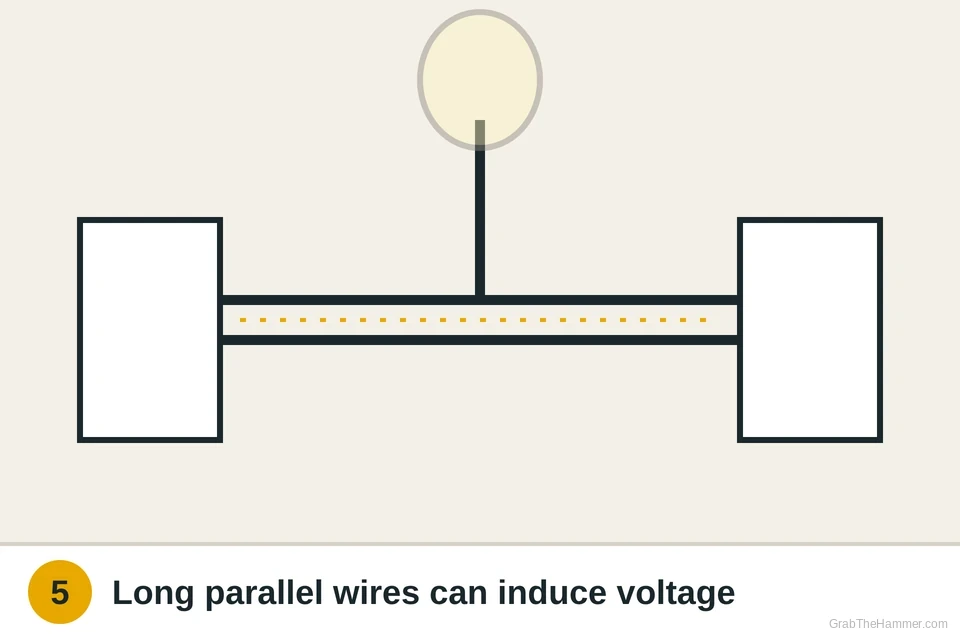
- Look into induced voltageIf a plain switch with no light or electronics still leaves the LEDs glowing, induced voltage is a likely cause. It's especially common on three-way switch circuits, long cable runs, or where the switched wire runs next to another live wire for a long distance. A non-contact tester may beep on the fixture wire even with the switch off. This isn't dangerous in itself, but it can be enough to light an LED. The usual fixes are the same load capacitor at the fixture or a bulb less prone to ghosting. Rewiring to separate the cables is a job for an electrician.
- Rule out a switch on the neutralOccasionally a glow means the switch was wired to break the neutral (white) wire instead of the hot (black) wire. Then the fixture stays energized even with the light off, which is a shock hazard when changing bulbs and isn't allowed by code. With the switch off, carefully hold a non-contact voltage tester near the fixture's socket or its wires. A tester can also react to induced voltage, so a signal alone isn't proof. If it signals at the socket and the switch box (checked with the breaker off) shows the white wire connected to the switch with no colored tape marking it as hot, don't work on it. Call an electrician to correct the wiring.

Watch it done
- The bulb is fully dark when the switch is off
- No blinking or flashing after a few minutes off
- The light turns on and dims normally
Still glowing with a plain switch, or the socket tests live? Call an electrician.
If it comes back
If the glow returns after a bulb change, the new bulbs may use a different driver. Stick with the brand and model that worked, and keep a spare.
If the lights flicker or buzz when they're on, the dimmer and bulb may not be compatible. See the guide for flickering lights and the guide for bulbs that burn out quickly.
If a switch feels warm, crackles or sparks, stop using it and see how to replace a light switch safely, or call an electrician.
What a pro typically charges (a rough estimate; prices vary by area): An electrician typically charges about $100–$250 to diagnose and replace a switch or add a load capacitor, and more if wiring needs to be corrected.
Find an electrician near you