Fix peeling wallpaper seams
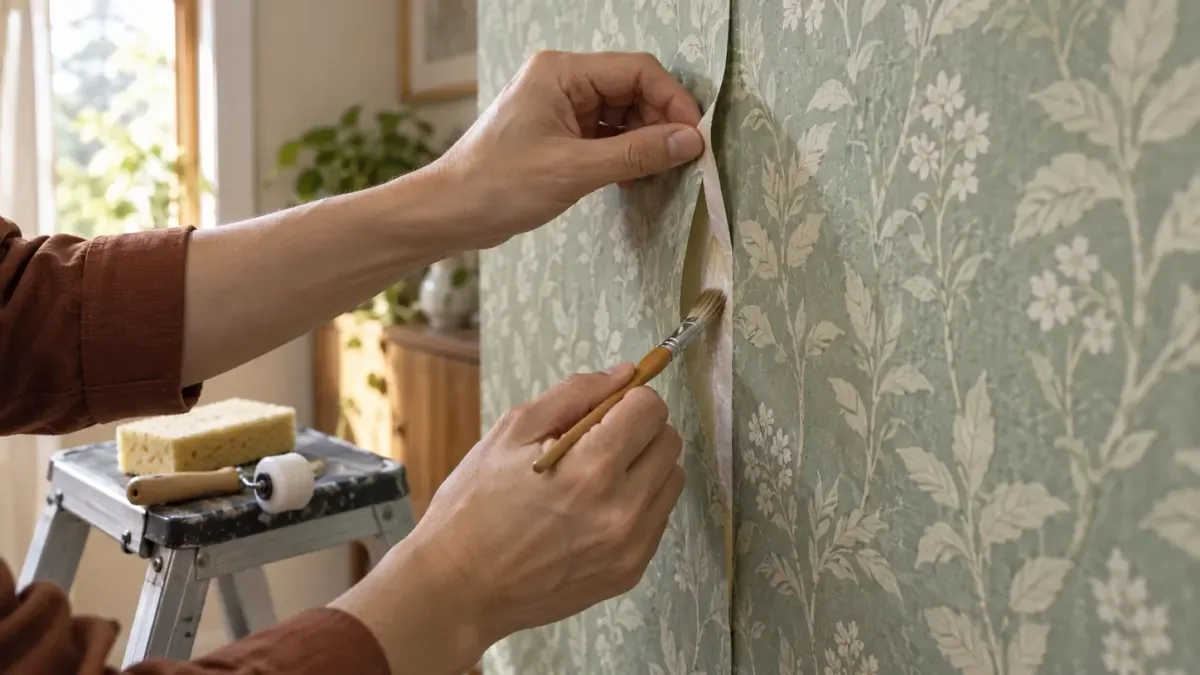
Peeling wallpaper seams are usually paper whose paste has dried out or let go from humidity, steam or a wall that wasn't primed. Regluing a lifted seam takes wallpaper seam adhesive, a small brush and a seam roller. The trick is working gently so the paper doesn't tear and wiping off every bit of extra adhesive before it dries, since dried adhesive leaves a shiny mark. Thin adhesive, a gentle roller, and a damp sponge right after.

Why wallpaper seams peel
Wallpaper is held to the wall by paste. Seams are the weak spots, because the paste there is thinnest and the edges get bumped and brushed. Bathrooms and kitchens are hardest on wallpaper, since steam softens the paste and the paper swells and shrinks with the humidity.
A seam that was rolled too hard when it was hung can be squeezed dry of paste, and wallpaper hung over unprimed drywall or a glossy paint can lift more easily. Bubbles in the middle of a sheet come from air or paste trapped behind it. Both seams and bubbles reglue the same way.
What loosens them
Paste softens and lets go.
Old adhesive loses its grip.
Paper never bonded well.
Paste was squeezed out at hanging.
| You notice | Likely cause | Start at |
|---|---|---|
| Seams lifting in a bathroom | Steam | Step 1 |
| One edge peeling | Dried paste | Step 2 |
| A bubble in the middle | Trapped air or paste | Step 8 |
| Shiny streak after repair | Dried adhesive | Step 7 |
Let's fix it
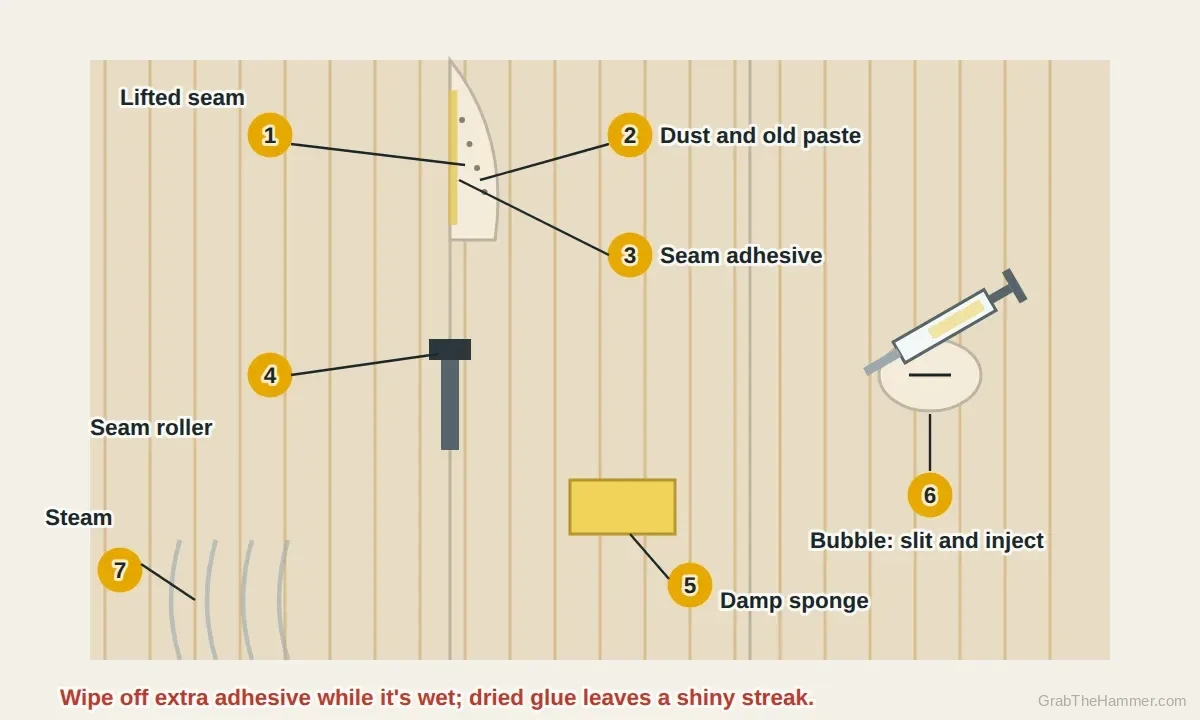
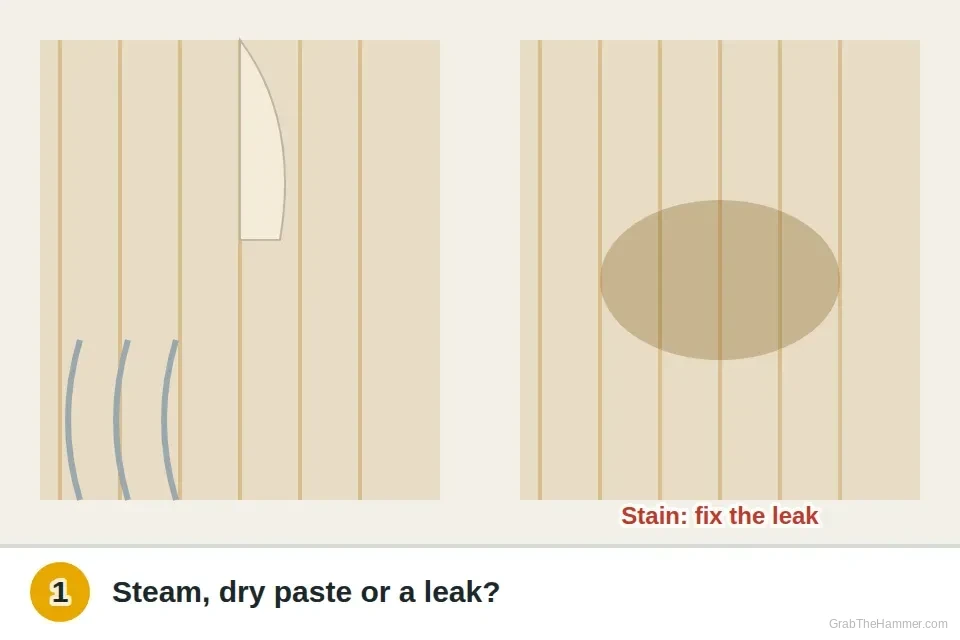
- Find out why it's peelingLook at where the seams are lifting. In a bathroom or near a stove, steam is the likely cause. A water stain or a soft wall behind the paper means a leak; fix that first, since regluing over a wet wall won't hold. If large areas are coming off, the wall may need stripping and priming rather than spot repairs.
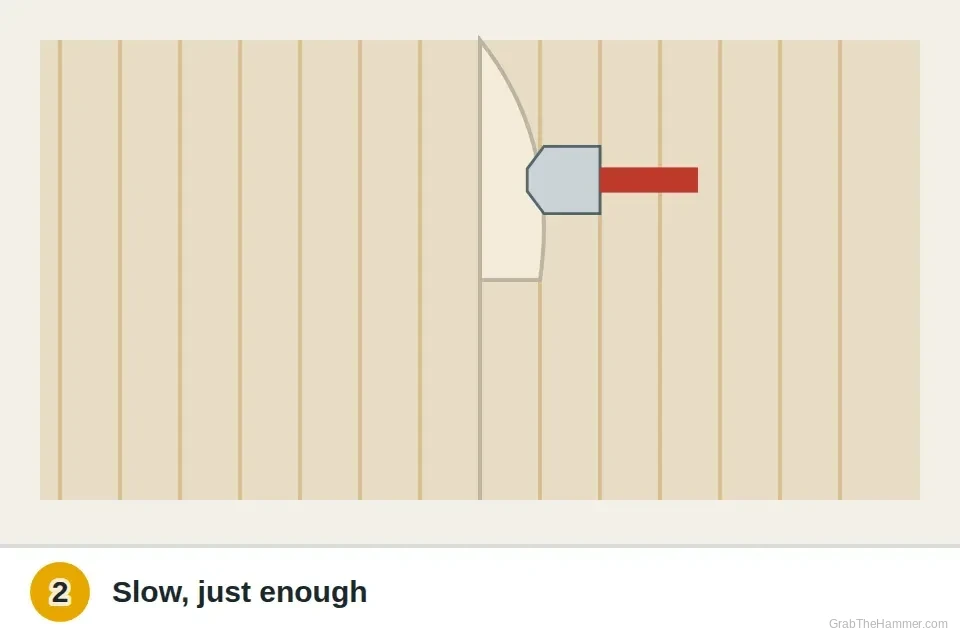
- Lift the edge gentlySlide a dull butter knife or putty knife under the loose edge and lift it just enough to reach behind it. Go slowly so the paper doesn't tear. Stop where it's still well stuck.
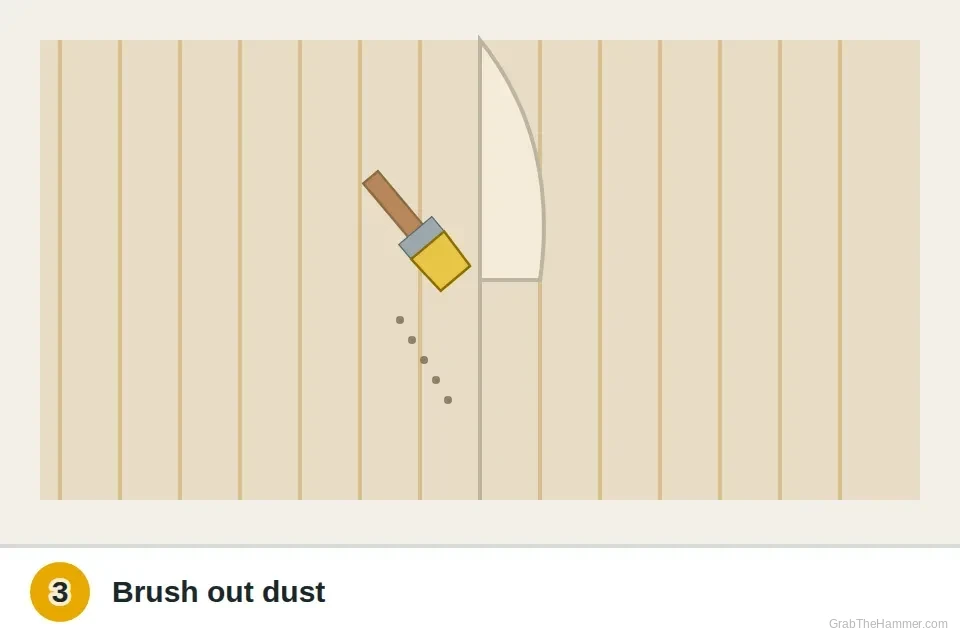
- Clean under itBrush out dust and flakes of old paste from behind the edge with a dry brush. A clean surface bonds better.
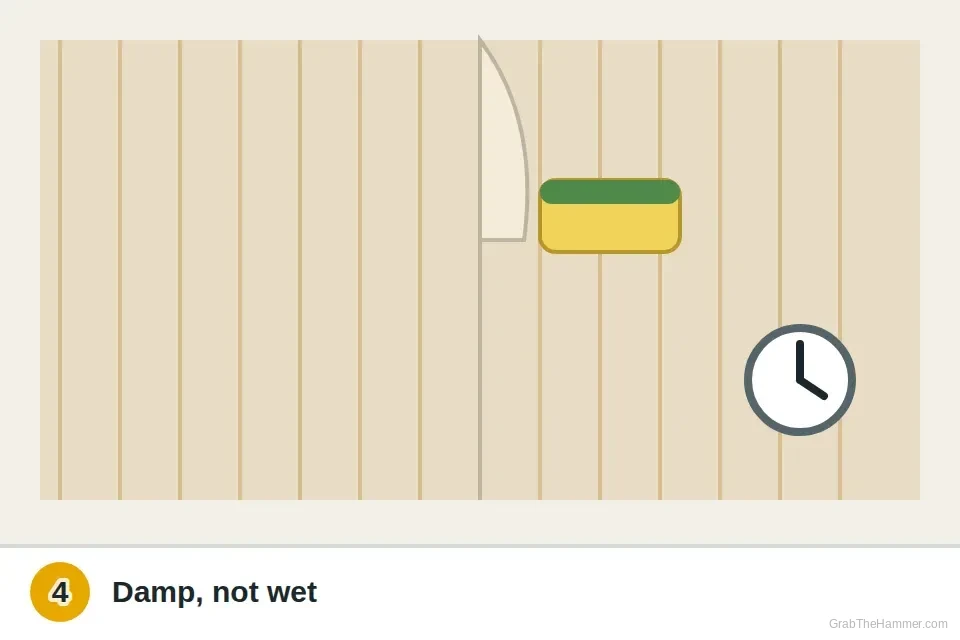
- Relax stiff paperIf the paper is dry and brittle, dab the edge lightly with a barely damp sponge for a minute so it softens and lies flat. Don't soak it; wet paper tears and stretches.
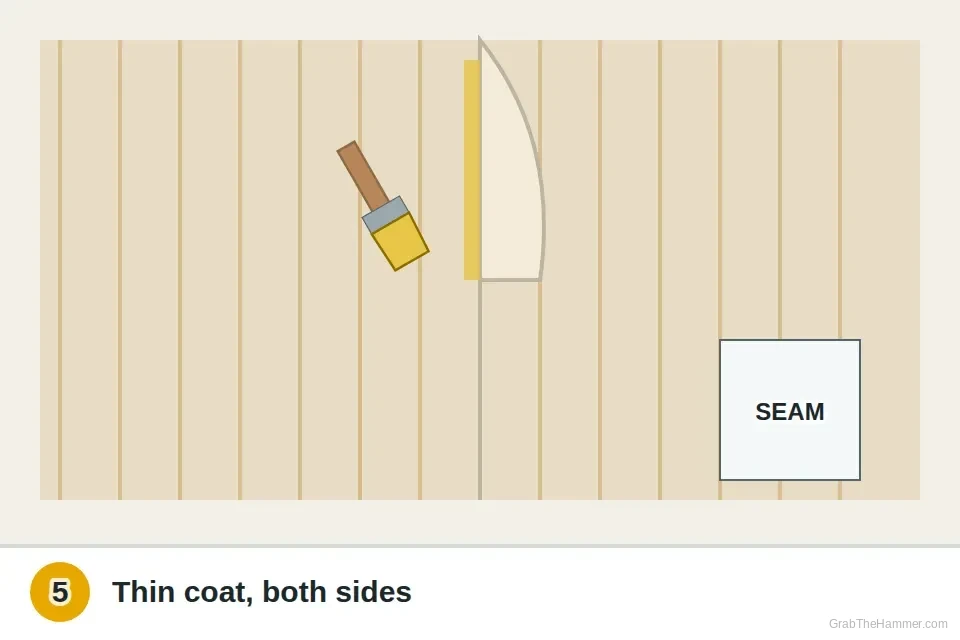
- Apply seam adhesiveBrush a thin coat of wallpaper seam adhesive on the wall and the back of the paper edge, working it all the way to where the paper is still stuck. Use just enough to cover; too much squeezes out and stains.
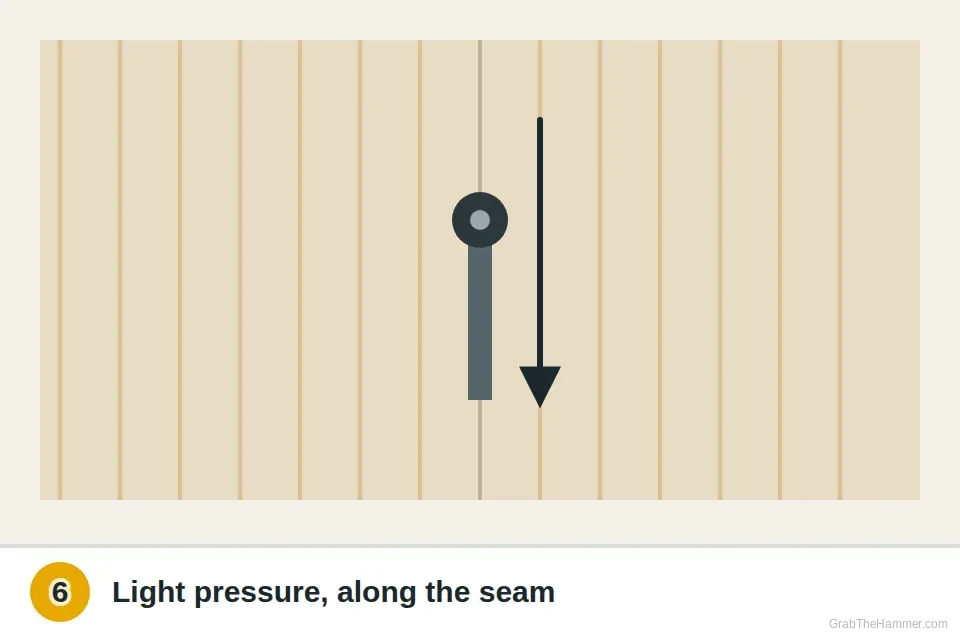
- Roll it flatPress the edge back into place and roll it with a seam roller, using light pressure and working along the seam. Line the edges up so they meet without overlapping.
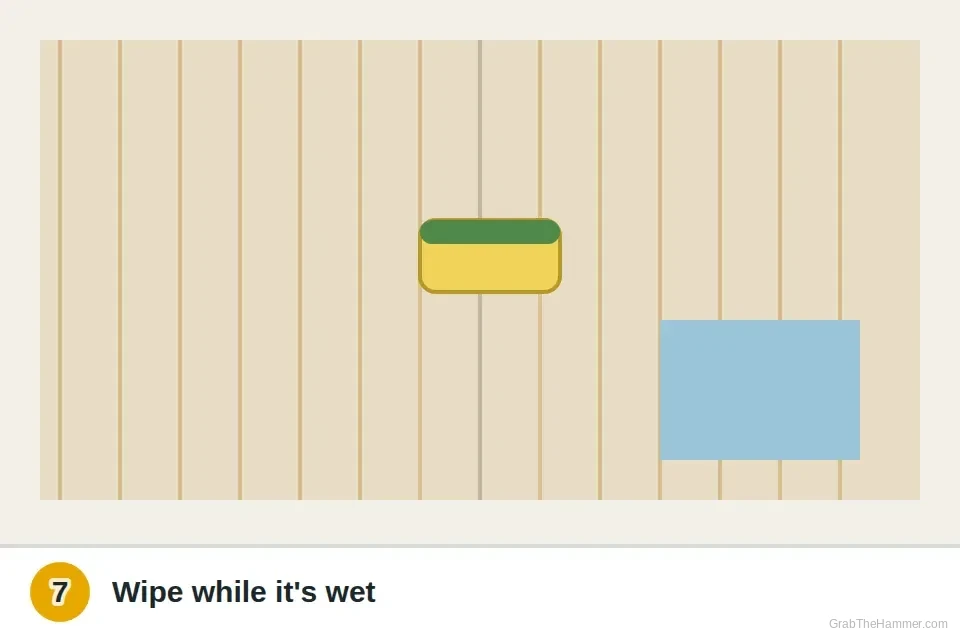
- Wipe off the extra right awayWipe the seam with a clean, damp sponge, rinsing it often, until no adhesive is left on the surface. Then pat it dry with a soft cloth. Dried adhesive leaves a shiny streak that's hard to remove.
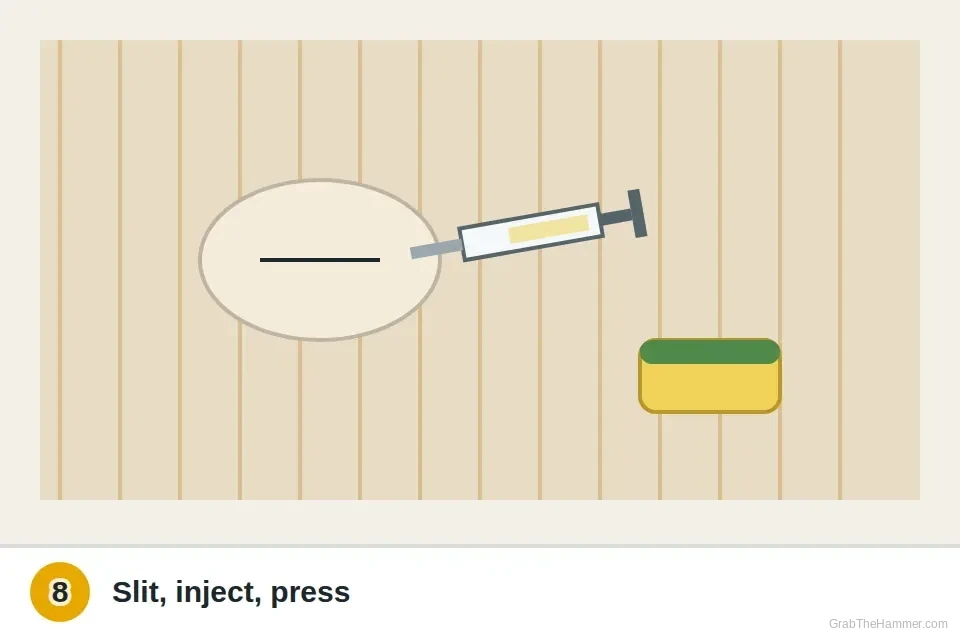
- Fix bubbles the same wayFor a bubble, make a short slit through it with a sharp blade, following a line in the pattern if there is one. Squeeze a little seam adhesive in with a syringe, press the paper flat with a damp sponge, working from the edges toward the slit, and wipe off the extra. Run the bathroom fan during and after showers to keep the seams from lifting again.
Watch it done
- The seam lies flat
- No shiny adhesive streak
- Edges meet without overlapping
If it's paint
If the wall is painted instead, check our guide for fixing peeling paint.
If the bathroom stays steamy, there's a separate guide for a noisy or weak bathroom exhaust fan.
What a pro typically charges (a rough estimate; prices vary by area): A paperhanger or painter typically charges $100–$300 to repair seams in a room, and more to strip and rehang wallpaper.
Find drywall repair near you