Remove wallpaper without damaging the wall
Most wallpaper comes off with warm water, patience and a wide scraper. The trick is letting the paste soften before you scrape, so you lift the paper instead of tearing the face of the drywall underneath. Newer strippable papers often peel off dry in full sheets. Older papers, painted-over papers and layers need scoring and soaking. Take it slow on drywall: gouges and torn drywall paper are the main things that turn a weekend job into a repair job.

How wallpaper is attached
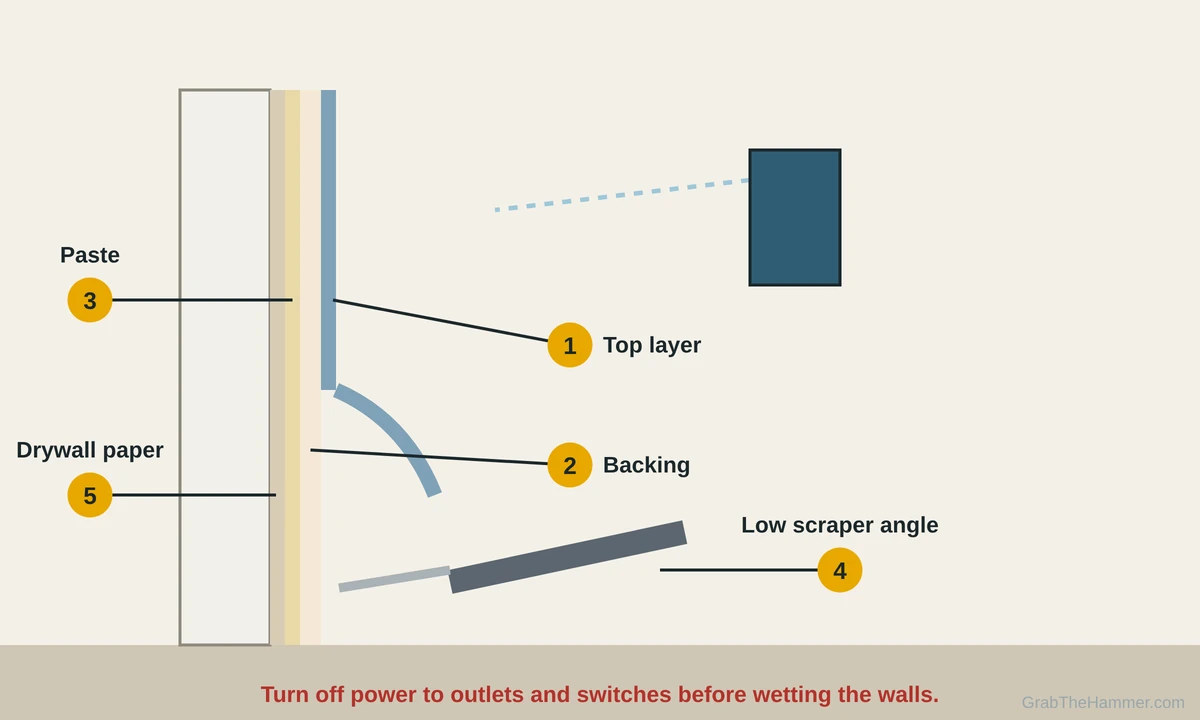
Wallpaper is held on by a water-soluble paste, usually a starch or clay-based adhesive, rolled onto the back of the paper or the wall. Many modern papers are strippable or peelable: the paper is made so the whole sheet, or at least the decorative top layer, lets go when you lift a corner and pull. Older papers, papers with a vinyl or plastic face, and papers that were painted over keep water out, so the paste underneath stays hard until you break through the surface and give water time to soak in.
On drywall, the danger is that drywall has its own paper face, and wallpaper paste can bond to it tightly, especially if the wall was never primed or sealed before the paper went up. Scrape too hard or too soon and you peel the drywall's paper off along with the backing, leaving brown, fuzzy patches that need sealing and skim-coating. Plaster walls are much harder and stand up to water and scraping better. Soaking with plenty of warm water, waiting, and scraping at a low angle are what keep the wall intact. If you're not sure which you have, press a pushpin into the wall in a closet: it slides into drywall easily but barely dents plaster.
Why wallpaper is hard to remove
Keeps water from reaching the paste.
Paint seals the surface like a coat of plastic.
Each layer needs its own soak.
Paste bonded to the drywall's paper face.
The paste is still hard when you scrape.
| You notice | Likely cause | Start at |
|---|---|---|
| Not sure what you have | Test a hidden spot | Step 1 |
| Whole sheets peel off dry | Strippable paper | Step 2 |
| Top layer peels, backing stays | Peelable paper | Step 3 |
| Nothing peels, or it's painted | Score and soak | Step 3 |
| Paper's off, wall feels slick or sticky | Paste left behind | Step 4 |
| Brown fuzzy patches or gouges | Damaged drywall face | Step 5 |
Let's fix it
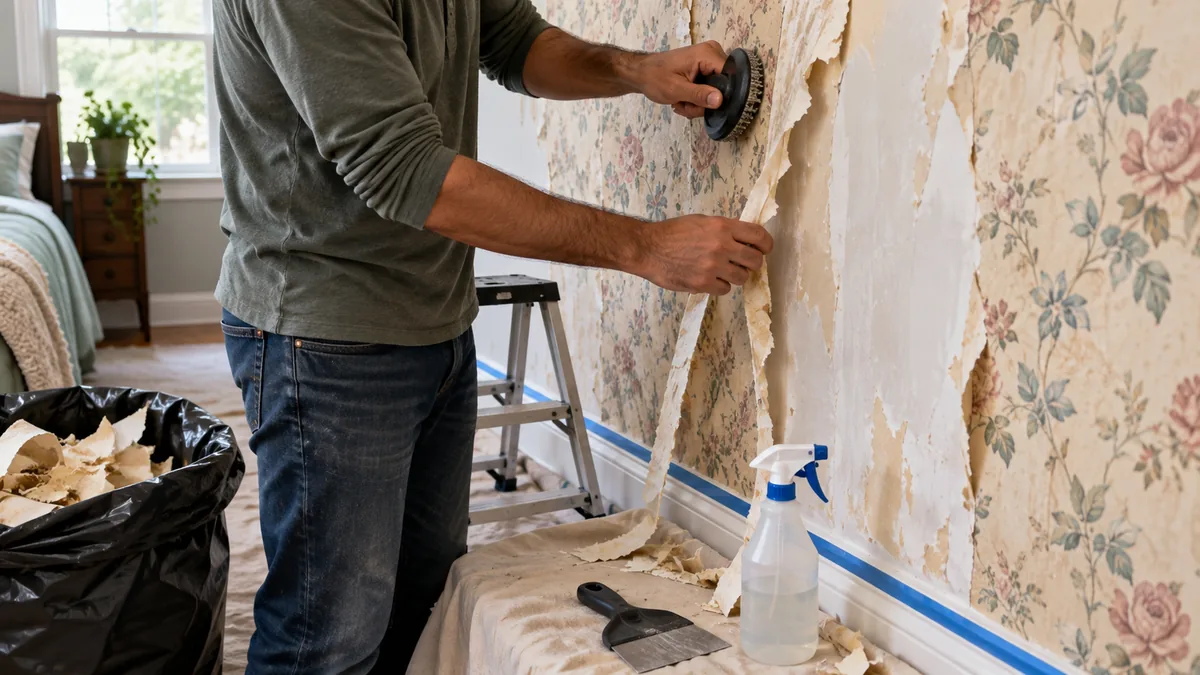
- Prep the room and test a cornerMove furniture away from the walls, lay plastic sheeting on the floor with towels along the baseboards, and turn off the breaker for outlets and switches in the room. Remove outlet and switch cover plates and tape over the boxes. Then test: pick a corner near a seam, slip a putty knife under the edge and pull slowly at a low angle. Note whether the whole sheet comes off, only the top layer, or nothing at all, and look at what's under it. If you see brown drywall paper, take it extra slowly from here on.

- Peel strippable paper dryIf the sheet came off whole, keep going: lift each sheet at a bottom or top corner and pull it slowly back on itself, close to the wall, at a low angle rather than straight out. Pulling slowly and low reduces tears and keeps it from taking drywall paper with it. If it starts tearing, work the putty knife under the edge to start a new pull. When the paper is off, you'll usually still need to wash off a thin film of paste (Step 4), even if the wall looks clean.

- Score and soak the restIf only the top layer peeled off, the backing paper soaks easily, so skip scoring. If nothing peeled or the paper was painted, roll a scoring tool lightly over the surface in circles to make small holes; press lightly so you don't cut into the drywall. Fill a garden pump sprayer or spray bottle with hot tap water and a capful of liquid fabric softener, or mix a commercial wallpaper stripper as its label says. Spray a section about 3 to 4 feet wide until it's thoroughly wet, wait 10 to 15 minutes, and spray again. The paper should look dark and feel soft and slimy. Soak the next section while you scrape this one.

- Scrape gently, then wash off the pasteHold a wide plastic or flexible metal scraper (a 4 to 6 inch drywall knife with rounded corners works) at a low angle, nearly flat to the wall, and push it under the softened backing. Let it slide; if you have to force it, soak more. Drop the wet paper straight into a trash bag. When the paper's off, the wall will feel slick or tacky from leftover paste. Wash it with a sponge and a bucket of hot water with a little dish soap or a paste remover, rinsing the sponge often, and wipe with clean water. The wall should feel smooth and not sticky when dry. Leftover paste causes new paint to crack and peel.

- Repair torn drywall paperWhere the drywall's brown paper shows, or the face got fuzzy or torn, don't paint over it or apply water-based patching directly; moisture makes the paper bubble. Let the wall dry completely, cut away loose paper with a sharp utility knife, then seal those spots with an oil-based or shellac-based primer, or a primer made for damaged drywall paper. Once that's dry, skim the area with a thin coat of joint compound, let it dry, sand lightly and repeat if needed. Gouges get filled the same way. For small holes from old anchors, see how to patch a hole in drywall.

- Let it dry and prime before paintingGive the walls at least a day to dry completely, longer in a humid room. Check by running your hand over them: they should feel smooth and dry, with no tackiness. Look at the wall with a light held sideways to spot leftover paste or ridges, and touch them up. Then prime the whole wall with a good primer before painting; it seals any paste residue and gives the paint an even base. The paint calculator shows how many gallons the room needs. Turn the breaker back on, replace the cover plates and put the room back together. See the guide for touching up wall paint for painting tips.

Watch it done
- All paper and backing are off
- The wall feels smooth and isn't sticky when dry
- Torn spots are sealed and skimmed flat
- Primer goes on evenly with no bubbling
Large areas of torn drywall? A drywall or painting pro can skim the wall.
If it comes back
If paint cracks or wrinkles over the old wallpaper area, paste was left on the wall. Scrape the failed paint, wash the wall again with hot water, let it dry, prime and repaint.
If new paint bubbles over spots where drywall paper tore, those spots weren't sealed. Cut out the bubbles, seal with shellac- or oil-based primer, skim and repaint. See the guide for peeling paint.
If you decide to keep the wallpaper and only the seams are lifting, see how to fix peeling wallpaper seams.
What a pro typically charges (a rough estimate; prices vary by area): A painter typically charges about $1 to $2.50 per square foot of wall for wallpaper removal, often a few hundred dollars per room, and more for wall repair and skim coating.
Find a wallpaper removal pro near you