Remove trim or baseboard without damaging the wall
Painting, replacing flooring, or fixing a leak often means taking trim off first. Rip it off and you'll tear the drywall and snap the trim. Take your time with a utility knife and two tools, and it comes off in one piece.
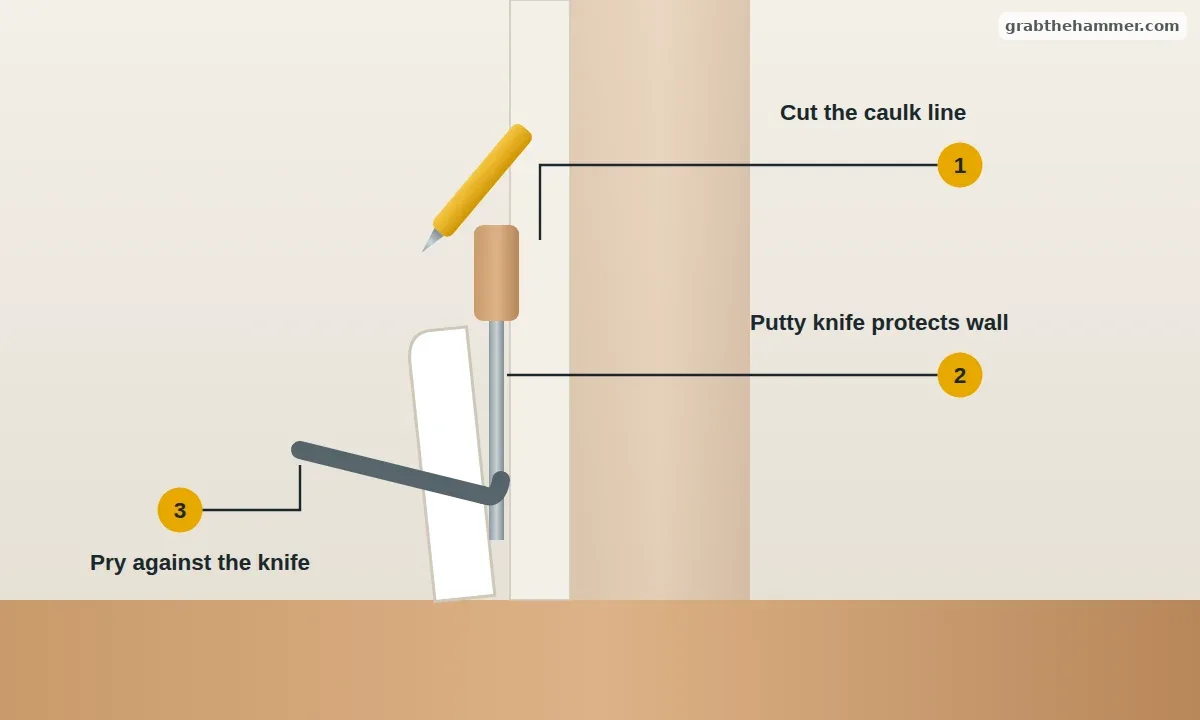
What's actually going on
Trim is held on by finish nails and usually sealed to the wall by caulk and paint. The paint and caulk are what tear the drywall paper, so the first step is cutting that seal. Then you pry against a wide, flat tool instead of the wall itself, so you're not crushing drywall.
Why it happens
This is what tears the drywall paper.
Levering against drywall crushes it.
Old, dry wood splits easily.
Long nails grip hard; go slowly.
Let's fix it
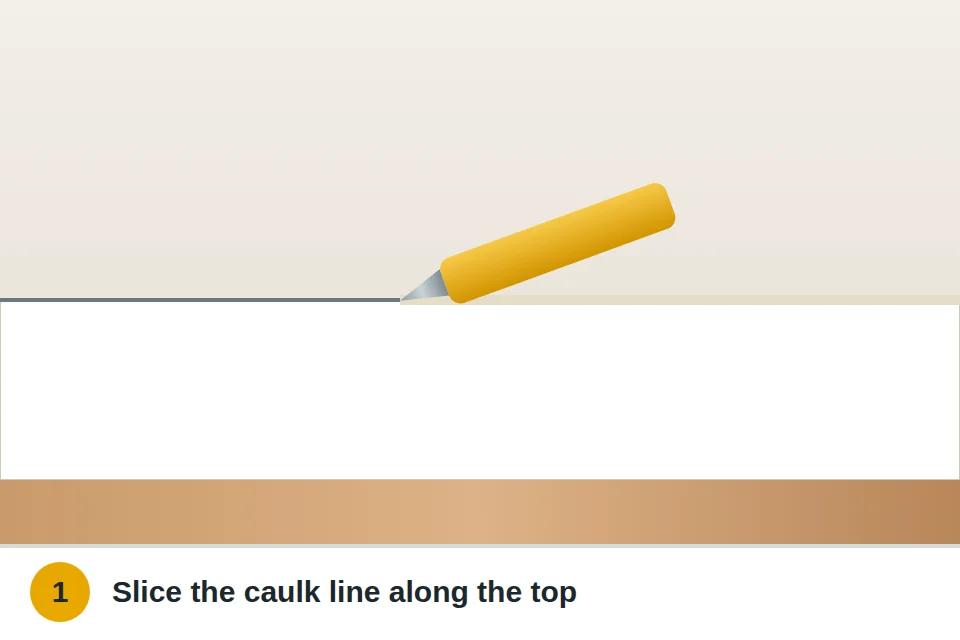
- Cut the sealRun a utility knife along the top edge where the trim meets the wall to slice the caulk and paint line.
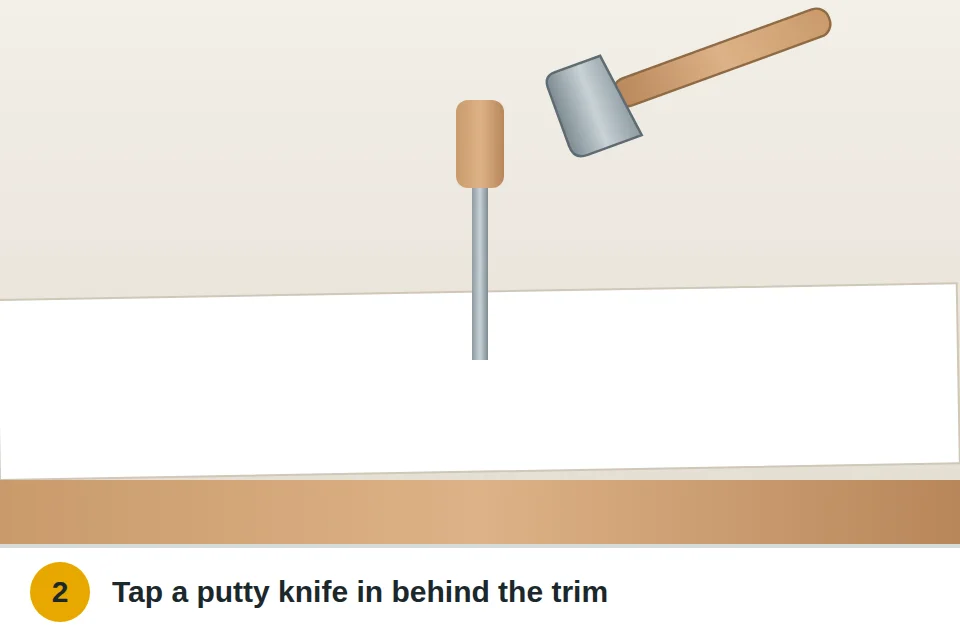
- Slip in a putty knifeTap a stiff putty knife gently behind the trim near a nail to open a gap without touching the drywall.
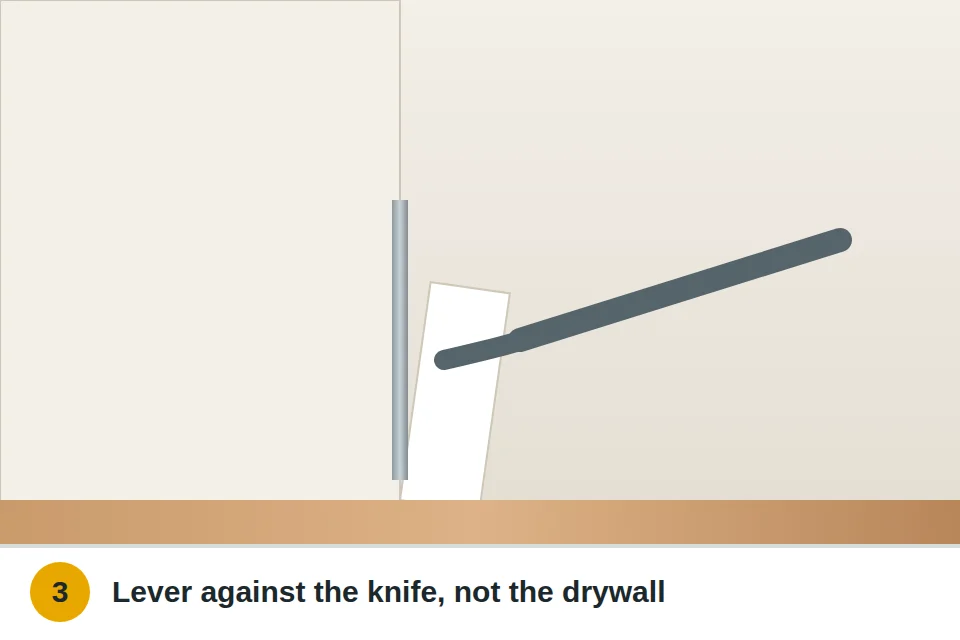
- Pry against the knifeSlide the pry bar in front of the putty knife and lever gently. The knife spreads the pressure so the wall isn't crushed.
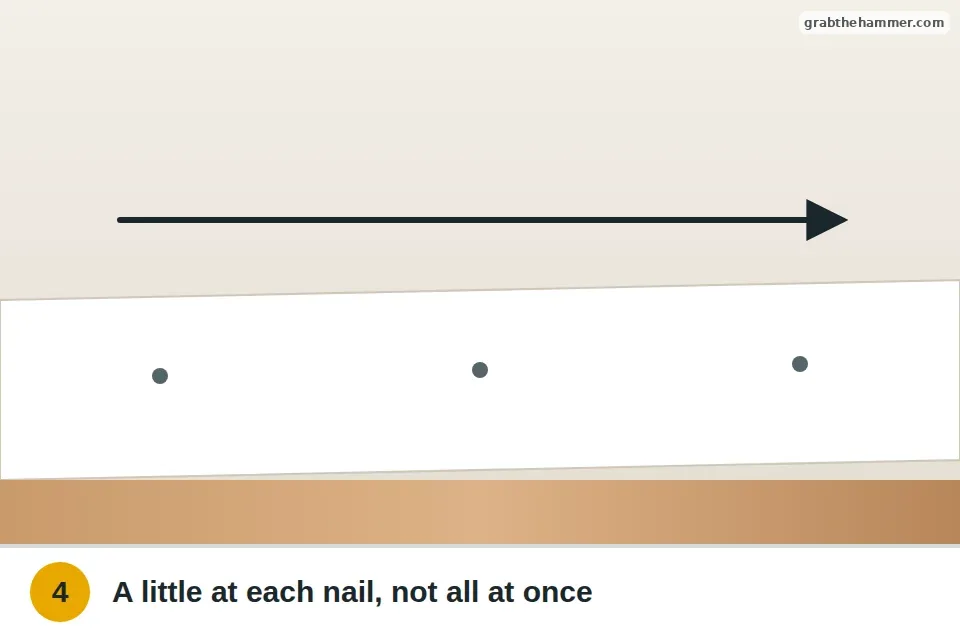
- Work along the boardMove to the next nail and repeat, easing it out a little at a time instead of all at once.
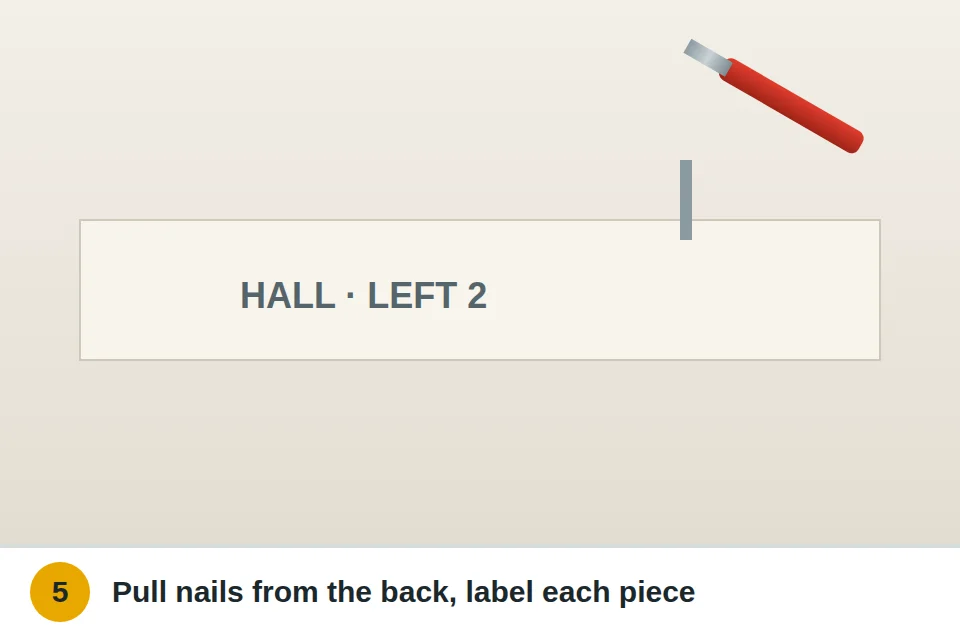
- Pull nails through the backTo reuse trim, pull the nails out from the back with pliers so the face doesn't splinter. Number the back of each piece.
Still not fixed?
If the drywall paper tears anyway, seal the torn spot with a coat of primer before patching, or the patch will bubble.
If trim splits, glue it with wood glue and clamp it with painter's tape before reinstalling.
What a pro charges: A handyman typically charges $50–$100 per room to remove trim carefully.
Common questions
How do I remove baseboard without damaging the wall?
Cut the caulk line, then pry against a putty knife or wood shim instead of the drywall.
Can I reuse baseboard after removing it?
Yes, if you pull the nails out through the back and label each piece.