Electrical

Fix a loose outlet in the wall

An outlet that wiggles when you plug something in usually has loose mounting screws, or it sits too far back in the wall to tighten against anything. That is common after tile, paneling or a new wall layer goes up. Sometimes the electrical box behind it is loose instead. First make sure the outlet isn't warm, scorched or buzzing. If it looks normal, the fix is often two screws or a few cheap plastic spacers.

Hands tightening the mounting screw of a recessed outlet in a white subway tile backsplash, with the cover plate, outlet spacers and a voltage tester on the counter
With the breaker off, spacers bring a sunken outlet out flush so it holds a plug firmly.
Quick answerFeel the cover plate and look for brown or black marks. If you find heat, scorching or buzzing, stop using it and turn the breaker off. If it looks fine, turn off the breaker, check that it's dead with a non-contact voltage tester, and remove the cover plate. Tighten the two mounting screws until snug. If the outlet sits behind the wall surface, add outlet spacers behind its mounting ears so it rests flush. If the box itself moves, it needs securing.
Worth checking firstWiggle the outlet with the plate on and watch what moves. If only the outlet moves inside the plate, the screws are loose or it's recessed. If the plate and outlet move together as one, the box may be loose in the wall. If plugs slide out with no wiggle at all, the contacts inside are worn and the outlet needs replacing.
Easy15–45 min$0–$15
Side cutaway of a wall with tile over drywall, showing an electrical box set back behind the tile, an outlet whose mounting ears rest on stacked spacers, mounting screws through the spacers into the box, the cover plate on the tile surface, and wires on the outlet's side terminal screws
The cover plate (1) sits on the finished wall. Mounting screws (2) hold the outlet to the box. Outlet spacers (3) fill the gap when the box (4) sits behind the wall surface (5), such as tile added over drywall. Wires attach at the terminal screws (6).

How an outlet is held in the wall

An outlet (the electrician's word is receptacle) is screwed to a plastic or metal box inside the wall. A metal strap called the yoke runs down the back of the outlet. Its ends, the mounting ears, have a screw at the top and bottom that threads into tabs on the box. When the box sits flush with the wall surface, the ears rest against the wall and the outlet stays solid. The cover plate then screws to the outlet and covers the opening.

Trouble starts when the box sits deeper than the wall surface. Tile, paneling or extra drywall can push the finished wall out past the box. Tightening the screws then pulls the outlet back into the hole instead of holding it firm. Building inspector Reuben Saltzman of Structure Tech notes that spacers suit small setbacks, while a box set back more than 1/4 inch, or set back in a combustible wall like wood paneling, calls for a box extender.

Why an outlet comes loose

Loose mounting screws

The top and bottom screws back out over years of plugging in.

Box set too deep in the wall

Tile, paneling or new drywall left the box behind the surface.

Stripped screw holes in the box

Overtightening or old plastic tabs no longer grip the screw.

The box itself is loose

Old-work clamps or nails let go, so box and outlet move together.

Worn outlet contacts

Plugs fall out even though the outlet is tight; replace the outlet.

Heat damage

Warmth, scorch marks or buzzing mean stop and replace or call a pro.

What's happening?
You noticeLikely causeStart at
Warm, scorched, buzzing or smells hotStop using it and check for damageStep 1
Not sure what moves yetBreaker off and verify it's deadStep 2
Ready to look behind the plateRemove the plate and diagnoseStep 3
Outlet wiggles, box is solidTighten the mounting screwsStep 4
Outlet sits sunk behind the wallAdd outlet spacersStep 5
Box is deep or loose in the wallAdd a box extender or secure the boxStep 6
Heat, scorch marks and live wiresIf the outlet or plate feels warm, smells hot, buzzes, or shows brown or black marks, stop using it. Turn its breaker off and leave it off until the outlet is replaced or checked. Before you touch the outlet or any screw on it, turn the breaker off and confirm it's dead with a non-contact voltage tester. Test the tester on a working outlet first. Don't pull or bend wires beyond checking that they're tight. A loose outlet can loosen its wires, which may lead to arcing and heat.

Let's fix it

0 of 6 done
  1. Stop using it and check for damageUnplug anything in the outlet. Rest the back of your hand on the cover plate. A standard outlet should feel the same temperature as the wall; Leviton notes that dimmers may run warm but outlets shouldn't. Look for brown or black marks, melted plastic or a burning smell, and listen for buzzing or crackling. Also try a plug: if it slides out with no grip, the contacts inside are worn. Any of these signs means the outlet needs replacing, not tightening. Stop here, turn off its breaker and leave it off. Then replace the outlet or call an electrician. If everything looks and feels normal, go to Step 2.
    Something went wrong?
    • There's a scorch mark, but the outlet still works Don't keep using it. Scorching often means a loose wire has been arcing. Turn the breaker off and replace the outlet, or call an electrician if wires look burned.
    Outlet cover plate with a dark scorch mark around one plug slot and a hand held flat near it to feel for heat, with a red stop sign beside it
  2. Turn the breaker off and verify it's deadFind the breaker for the outlet in your panel and switch it fully off. If the panel isn't labeled, plug a lamp into the outlet and flip breakers until it goes dark. Next, test your non-contact voltage tester on an outlet you know works; it should beep or light. Then hold its tip to each slot of the loose outlet, and later to the wires once the plate is off. It should stay quiet. One box can hold wires from two circuits, so check both halves and every wire. If the tester still reacts, stop and find the right breaker before going further. Tell others in the house not to switch it back on.
    Something went wrong?
    • The tester beeps with the breaker off You may have the wrong breaker, or the box has a second circuit. Try other breakers until the tester stays quiet. If you can't make it go silent, call an electrician.
    Breaker panel with one breaker switched off next to an outlet where a yellow non-contact voltage tester touches the slot and shows no light
  3. Remove the plate and see what movesWith the power verified off, turn the center cover plate screw counterclockwise and lift the plate away. Now grip the outlet by its mounting ears and gently rock it. Watch three things. If the outlet moves but the box stays put and the ears sit level with the wall, the mounting screws are loose; go to Step 4. If the ears sit behind the wall surface, the outlet is recessed; go to Step 5. If the box moves with the outlet, go to Step 6. While it's open, check each wire under its screw with the tester still nearby. Wires should feel snug. Don't bend or pull them. If any wire is loose, blackened or brittle, stop and see the replace-an-outlet guide or call an electrician.
    Something went wrong?
    • The plate is painted to the wall Score around the plate edge with a utility knife before prying, so the paint doesn't peel off the wall with it.
    Outlet with its cover plate removed and set aside, showing the mounting ears at top and bottom, with arrows showing the outlet rocking in the box
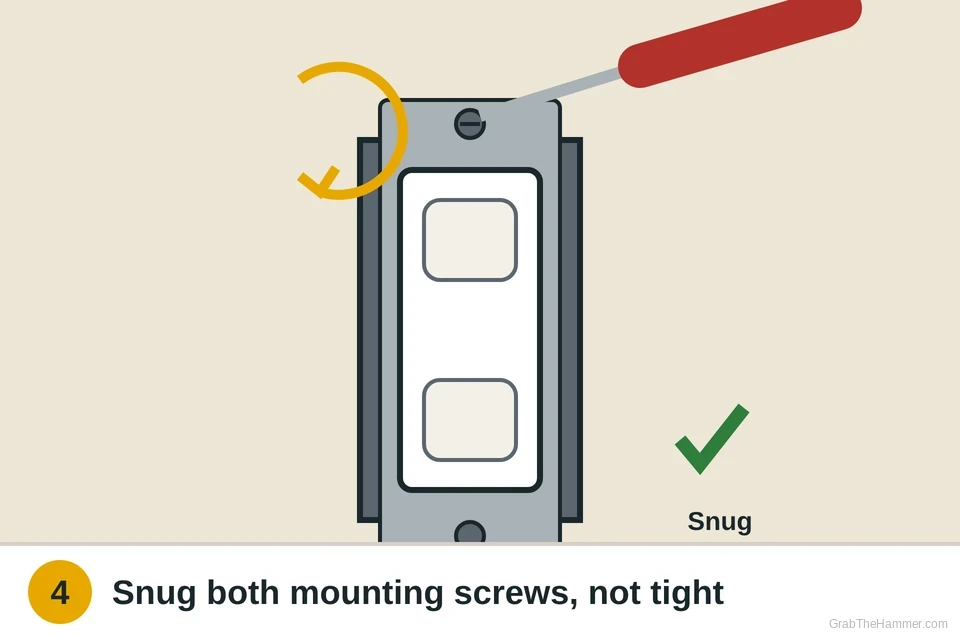
  4. Tighten the mounting screwsIf the box is solid and the outlet's ears sit flush with the wall, this is usually all it needs. With the breaker still off, use a Phillips or flat screwdriver on the top and bottom mounting screws. Turn them clockwise until the outlet sits firm against the wall. Stop at snug. Cranking hard can crack the outlet's plastic body or bend the yoke, and it can strip plastic box tabs. If a screw spins without tightening, the hole is stripped; a slightly longer screw of the same thread (often 6-32) may grip deeper in the tab. Put the plate back, hand-snug its screw so the plate doesn't crack, then restore power and test with a lamp or plug-in tester.
    Something went wrong?
    • Tightening pulls the outlet into the wall The box is set too deep. Back the screws out and add spacers as in Step 5.
    • The screw hole in the box is stripped Try a slightly longer screw of the same thread. If that won't hold, the box may need repair or an extender; see Step 6.
    Screwdriver turning the top mounting screw of an outlet clockwise, drawing the outlet's mounting ear snug against the wall surface
  5. Add outlet spacers behind the earsIf the ears sit behind the wall surface, tightening alone pulls the outlet deeper. Outlet spacers fix that. They're small stackable plastic shims, usually sold in packs for a few dollars, that slip onto the mounting screw between the ear and the box. With the breaker still off, back out the top and bottom screws. Slide spacers onto each screw, then refit the screws. Add or remove spacers until the ears rest flat on the finished wall. Use the same number top and bottom so the outlet sits straight. Tighten to snug, refit the plate, then restore power and test. Spacers suit small gaps; if the box sits more than 1/4 inch back, go to Step 6.
    Something went wrong?
    • The screws are now too short to reach the box Buy longer screws of the same thread, often 6-32. Some spacer packs include them. Don't leave the outlet held by one screw.
    Side view of an outlet's mounting ear with three stacked yellow spacers on the screw between the ear and the recessed box, bringing the outlet level with the wall surface
  6. Add a box extender or secure a loose boxA box extender is a plastic or metal collar that fits inside the box and brings its front edge out to the wall surface. Extenders are designed for boxes set more than about 1/4 inch back, and for any setback in a combustible wall like wood paneling, where codes often require one. Check your local code. With the breaker off and verified dead, unscrew the outlet, slide the extender over it into the box, and screw the outlet through the extender's tabs. If the whole box moves, it needs re-fastening, a box support bracket, or an old-work box with clamps. Box work means cutting drywall and handling wires, so call an electrician if you're unsure.
    Something went wrong?
    • The extender screws won't reach the box tabs Use the longer screws that come with the extender. If the tabs are broken or stripped, stop and call an electrician to repair or replace the box.
    • The box wobbles even after the outlet is tight Leave the breaker off and don't use the outlet. A loose box can strain wire connections. An electrician can secure or swap it, often in under an hour.
    A plastic box extender ring being slid into a recessed electrical box so its front edge sits level with tile on the wall, with an arrow showing it pushing in

Watch it done

How To Fix A Sunken Outlet With SpacersBy One Hour Smart Home on YouTube. Their method may vary a little from ours.
Watch on YouTube
How you'll know it's fixed
  • The outlet doesn't move when you plug in or unplug
  • Its ears and plate sit flat against the wall
  • A lamp or plug-in tester shows it works
  • Plugs grip firmly and the plate stays cool

Still moving, warm or losing power? Leave the breaker off and call an electrician.

If it comes back

If plugs keep falling out even though the outlet is now tight, the contacts are worn. Follow the guide to replacing an outlet, and consider a tamper-resistant model if kids are around.

If the outlet now has no power after you worked on it, a wire may have shifted, or a GFCI elsewhere may have tripped. Start with the guide for outlets not working. If a GFCI won't hold, see the guide for a GFCI that keeps tripping.

A light switch can work loose the same way and takes the same fix. If one wobbles in its box, see the guide to replacing a light switch.

Take a photo before you unscrew anythingSnap a picture of the outlet and its wires once the plate is off. It shows how everything sat if something shifts.
Renting?Feeling for heat and reporting a loose, warm or scorched outlet is the right move. Tightening a cover plate is usually fine, but let your landlord handle anything behind the plate.
Call an electrician ifThe outlet is warm, scorched or buzzing, the box itself moves, wires are loose or burned, the box tabs are broken, or a tester still reacts with the breaker off.Fix it yourself or call? Compare the cost →

What a pro typically charges (a rough estimate; prices vary by area): An electrician typically charges about $100–$250 to secure a loose box or replace an outlet, more if the box or wiring needs repair.

Find an electrician near you

Something else going on?

Loose outlet questions

Is a loose outlet dangerous?

It can be. Movement can loosen the wires on its screws, which may cause arcing and heat. Fix it soon, and stop using it if it's warm, scorched or buzzing.

Why is my outlet sunk into the wall?

The box usually sits deeper than the finished wall, often after tile, paneling or new drywall. Spacers fix small gaps; a box extender suits deeper ones.

How do you fix an outlet that moves when you plug something in?

Turn the breaker off, verify it's dead with a tester, remove the plate, and snug the two mounting screws. Add spacers if the outlet sits behind the wall.

Are outlet spacers safe to use?

Yes, for small gaps of about 1/4 inch or less behind a noncombustible wall like drywall. Deeper boxes, or boxes in wood paneling, should get a box extender.

Should I replace a loose outlet?

Only if it's damaged or worn. Replace it if plugs fall out, or it's warm, scorched or cracked. Otherwise tightening or spacers usually fix it.

Reader reports

Did this fix work for you?

Tell the next person how it went. Your numbers are added to the totals anonymously; tips are read by our team before they appear.

How did it go?
Reader Q&A

Questions from readers

No questions on this guide yet. If you're stuck, ask below. Useful questions and answers get added here for the next person.

Ask a question

We read every question before anything is published, and we never show names or emails. Please leave out personal details. PrivacyAccessibility

About the authors

GrabTheHammer Team

  • No sponsored picks
  • Safety first
  • Tells you when to call a pro

We're a small team of writers and editors who check every guide against manufacturer instructions and common code requirements. Our goal is to help you understand the problem, tackle what you safely can and know when to call a pro.

Checked against: Leviton outlet warning-sign guidance, Structure Tech home inspector notes on recessed boxes, spacers and extenders, and ESFi tamper-resistant receptacle guidance.

How we write and review →
A helpful next stepReplace an electrical outletSwap an outlet that's worn or damaged.